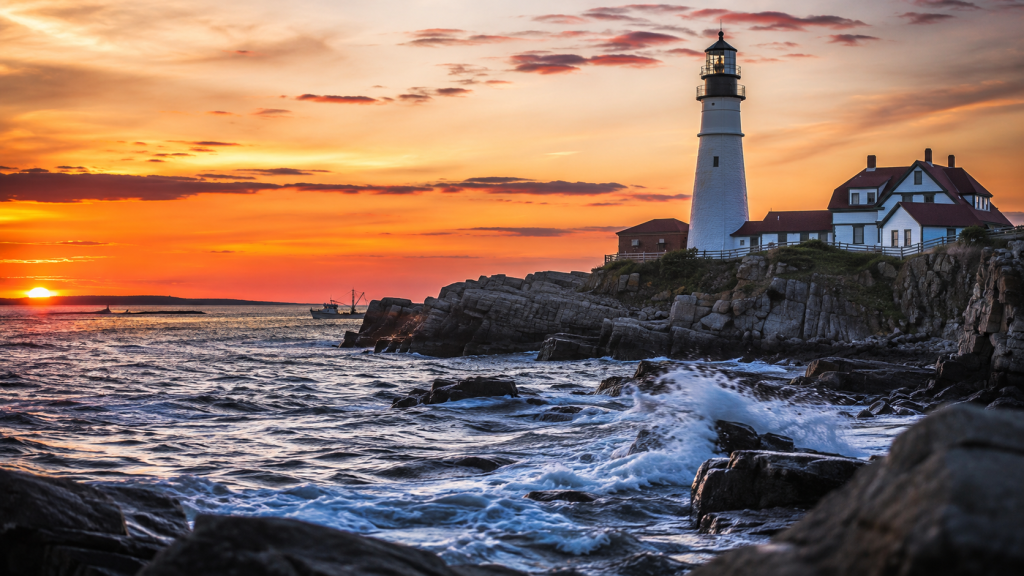
The fog hadn’t lifted yet when I pulled into the gravel lot at Pemaquid Point, just past 6 a.m., and the only sounds were gulls arguing somewhere out on the rocks and the low groan of a lobster boat engine warming up in the harbor below. Salt and spruce sap hung in the air. Then the light hit the tower — that first orange wash over white clapboard — and the fog started peeling back off the granite shelf like a curtain pulled by hand.
I’d driven up from Portland the night before on a whim, no real plan beyond “see some lighthouses,” and ended up spending four days working my way up the coast from Cape Elizabeth to Bass Harbor. This guide covers the eight lighthouses from that trip worth building a weekend or full road trip around, plus where to sleep, what to eat, and the specific pull-offs and timing that make the difference between a postcard and a parking lot full of tour buses.
Table of Contents
Why Maine’s Lighthouses Deserve More Attention Than They Get
Most people doing a Maine lighthouses road trip plan around two stops — Portland Head Light and Bass Harbor Head — because those are the ones that show up first in a search. That’s fine, but it means the other six on this list are often nearly empty even in July, despite being just as photogenic and, in a couple of cases, more dramatic.
Here’s a fact that surprised me: Maine has more lighthouses than any other state — over 60 active and historic towers along its coastline — yet the coastline itself, if you measured every inlet and peninsula, stretches roughly 3,500 miles, more than California’s. That convoluted, finger-like shoreline is exactly why lighthouses cluster so densely here; ship captains needed markers for every cove, ledge, and channel entrance. Another thing people don’t expect: several of these towers are still owned by the Coast Guard and operate as active aids to navigation, even though the keeper’s houses now function as small museums or, in one case, a bed and breakfast you can actually sleep in.
The other reason this scenic Maine coastal drive deserves more attention is timing. Acadia National Park gets hammered with visitors May through October, but the lighthouses sit far enough off the main park loop that you can have entire stretches of rock to yourself before 8 a.m., even in peak season.
You should read our complete guide for explore Hidden Gems in Maine: 10 Off-the-Beaten-Path Destinations Most Tourists Miss
The 8 Most Beautiful Lighthouses in Maine
1. Portland Head Light
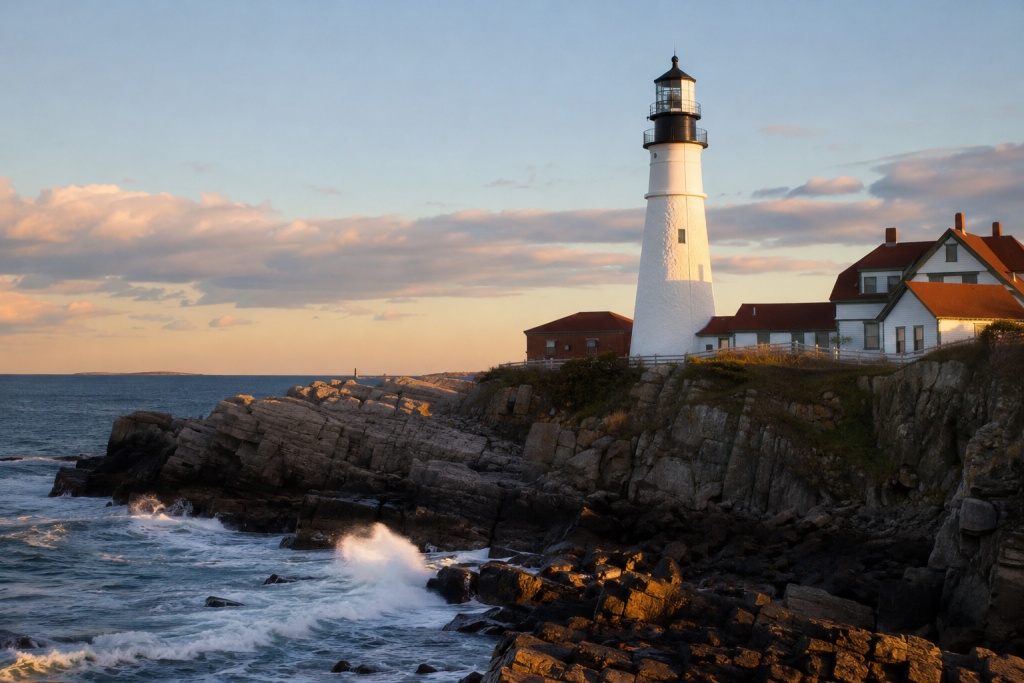
Why it’s special: This is the lighthouse most people picture when they think of Maine, and it earns the reputation — a white conical tower against black rock, with the keeper’s house now serving as a small maritime museum. It’s also the oldest lighthouse in Maine, commissioned by George Washington in 1791.
The experience: Arrive right at opening or within the last hour before sunset. The surrounding Fort Williams Park has wide lawns, old bunker ruins to explore, and a rocky shoreline where you can scramble down close to the water (carefully — the rocks are slick). Midday brings tour buses and wedding parties; early morning brings dog walkers and photographers and not much else.
Getting there:
- Address: 1000 Shore Rd, Cape Elizabeth, ME 04107
- From Portland: Take Route 77 S, then Shore Rd, about 15–20 minutes
- From Boston: I-95 N to Route 77, roughly 1 hour 45 minutes
- Parking: Large free lot at Fort Williams Park, fills up by mid-morning on summer weekends
Practical Info:
- Best months: June and September for fewer crowds with good weather
- Park hours: sunrise to sunset, museum hours
- Entry fee: Park is free; museum entry [VERIFY: current museum admission price]
- Difficulty: Easy, paved paths and short grass walks
- Dog-friendly: Yes, leashed. Kid-friendly: Yes
- Cell service: Strong
Where to Stay Nearby:
- Budget: Cape Elizabeth’s nearby motels are limited — try the Inn at St. John in Portland, roughly $90–120/night, innatstjohn.com
- Mid-range: Inn by the Sea, Cape Elizabeth, roughly $350–450/night, innbythesea.com
- Unique stay: The Keeper’s House concept doesn’t apply here, but consider a harbor-view Airbnb in nearby Cape Elizabeth via airbnb.com
Official & Useful Links:
- Official site: portlandheadlight.com
- Fort Williams Park info: capeelizabeth.com/fort_williams_park
Insider Tip: Skip the main overlook everyone photographs from and walk the shoreline path north about 200 yards to the second rock outcropping — you get the tower with the open ocean behind it instead of the parking lot.
2. Pemaquid Point Light
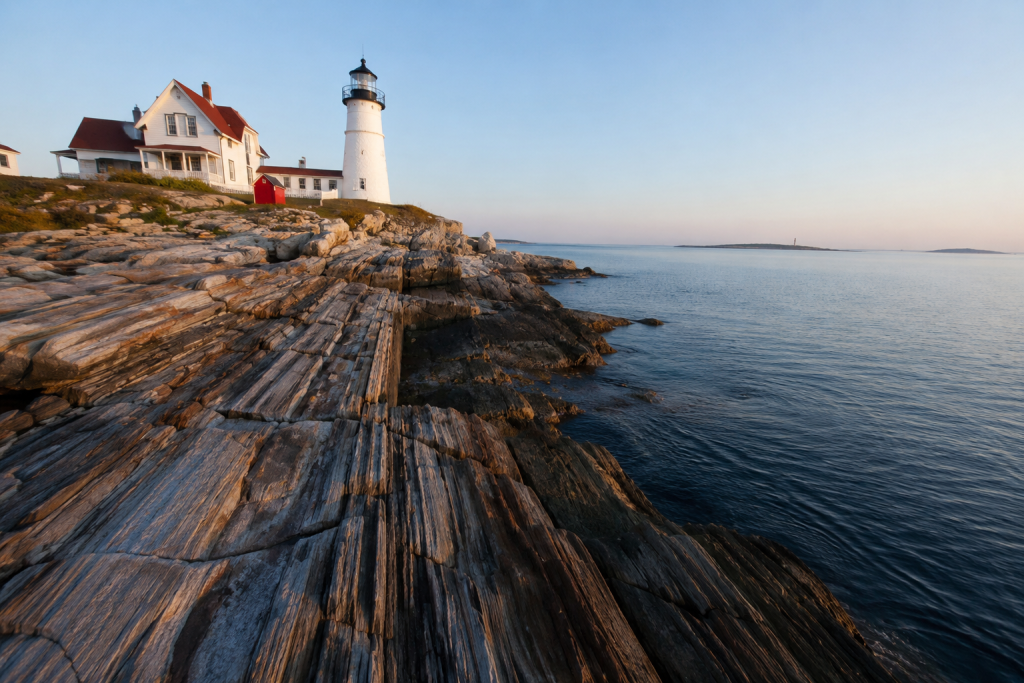
Why it’s special: The lighthouse sits atop wave-cut granite ledges that ripple outward like frozen waves themselves — geologically, they’re metamorphic rock striations, and they make this one of the most photographed rock formations in the state, lighthouse aside.
The experience: Low tide in early morning is the move. The light, the rock patterns, and the absence of crowds combine into something genuinely quiet. The Fishermen’s Museum inside the old keeper’s house is small but worth the ten minutes.
Getting there:
- Address: 3115 Bristol Rd, New Harbor, ME 04554
- From Portland: Route 1 N to Route 130 S, about 1 hour 30 minutes
- From Boston: roughly 3 hours
- Parking: Small paid lot, $3 suggested donation per car, fills by late morning in summer
Practical Info:
- Best months: May, June, September, October
- Hours: Grounds open dawn to dusk; museum seasonal
- Entry fee: Small donation requested at lot
- Difficulty: Easy, but rocks near the water are uneven — sturdy shoes recommended
- Dog-friendly: Yes, leashed. Kid-friendly: Yes, watch kids near the ledges
- Cell service: Weak to moderate
Where to Stay Nearby:
- Budget: Gosnold Arms Cottages, New Harbor, roughly $130–180/night,
- Mid-range: The Bradley Inn, New Harbor, roughly $200–280/night,
- Unique stay: Thompson House cottages along the harbor,
Official & Useful Links:
- Fishermen’s Museum
- Town of Bristol info: bristolparks.org
Insider Tip: The granite ledges to the left of the lighthouse (facing the water) have a natural tide pool that fills at mid-tide — kids can spend 20 minutes there without ever asking to leave.
3. Marshall Point Light
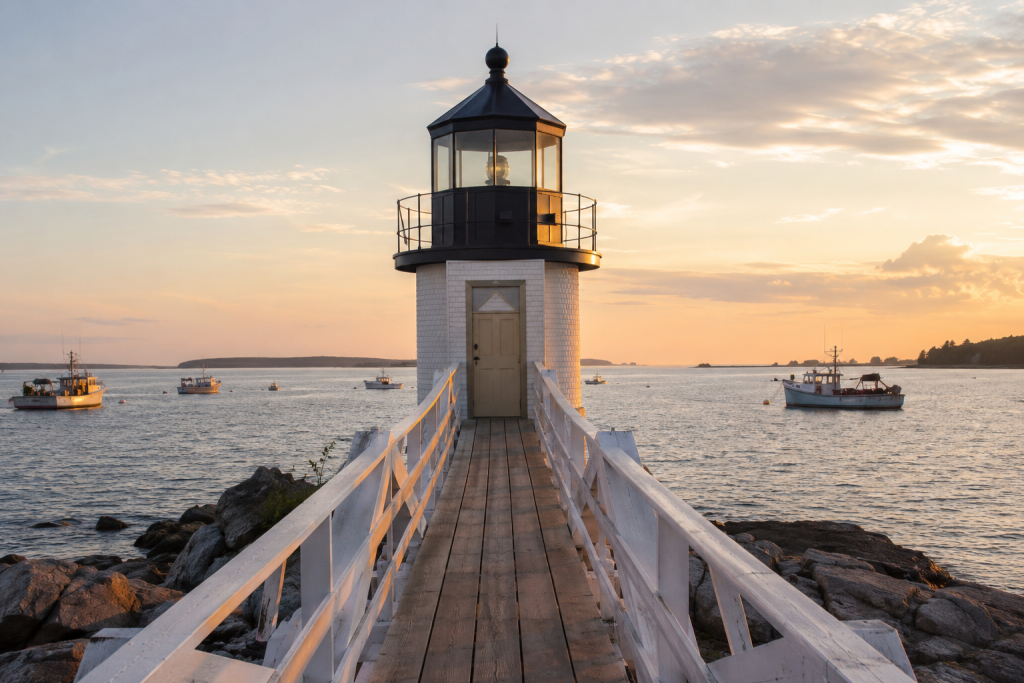
Why it’s special: Famous mostly for its narrow wooden walkway connecting the tower to shore — the kind of detail that makes a lighthouse instantly recognizable in photos — and for the fact that it shows up in Forrest Gump’s cross-country running scene.
The experience: Port Clyde itself is barely a village — a handful of buildings, a working harbor, and the lighthouse at the very tip. Evening light here, with lobster boats coming in for the day, is the best window.
Getting there:
- Address: 16 Marshall Point Rd, Port Clyde, ME 04860
- From Portland: Route 1 N to Route 131 S into Port Clyde, about 2 hours
- From Rockland: 25 minutes via Route 131 S
- Parking: Free small lot at the point
Practical Info:
- Best months: June through September for warm evening light
- Hours: Grounds open year-round; museum seasonal
- Entry fee: Free; museum donation suggested
- Difficulty: Easy
- Dog-friendly: Yes. Kid-friendly: Yes, the walkway has rails
- Cell service: Weak
Where to Stay Nearby:
- Budget: Gilchrest Lobster Camp area camping, [VERIFY: current rates]
- Mid-range: The Craignair Inn, Spruce Head, roughly $160–220/night, craignair.com
- Unique stay: East Wind Inn, Tenants Harbor, roughly $200–300/night, eastwindinn.com
Official & Useful Links:
- Marshall Point Lighthouse Museum: marshallpoint.org
Insider Tip: Park at the lot, but walk the extra five minutes down to the small cove just south of the point at low tide — it’s where local photographers actually shoot from, not the walkway itself.
4. Owls Head Light
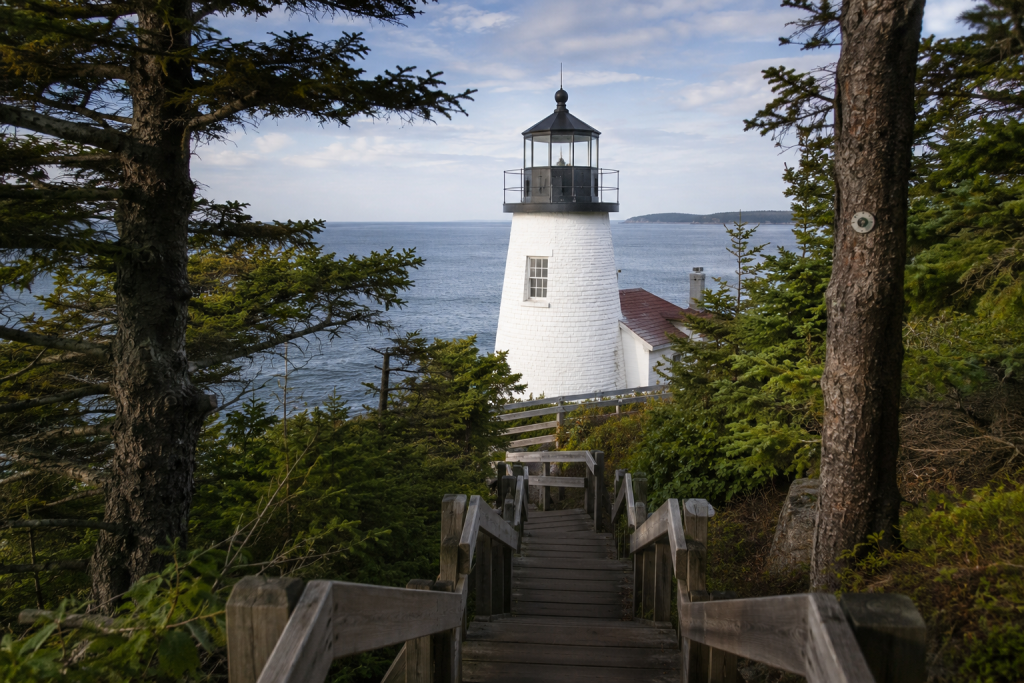
Why it’s special: Smaller and less visited than its neighbors, Owls Head sits atop a wooded bluff with a steep staircase down to the light itself, giving it a tucked-away feel that the bigger lighthouses lost decades ago.
The experience: The walk in through the woods before the tower comes into view is half the appeal. Bring a thermos of coffee and sit on the bench near the top of the stairs — you’ll likely have it to yourself even on a Saturday in July.
Getting there:
- Address: 186 Lighthouse Rd, Owls Head, ME 04854
- From Rockland: 10 minutes via Route 73 and Main St
- From Portland: about 1 hour 45 minutes
- Parking: Small free lot, room for roughly 15 cars
Practical Info:
- Best months: Year-round, but fall foliage adds a lot to the woods walk
- Hours: Park open dawn to dusk
- Entry fee: Free
- Difficulty: Easy walk, moderate stair descent (52 steps) to the light itself
- Dog-friendly: Yes, leashed. Kid-friendly: Yes, supervise on stairs
- Cell service: Weak
Where to Stay Nearby:
- Budget: Lindsey Motel, Rockland, roughly $100–140/night,
- Mid-range: Trade Winds Inn, Rockland, roughly $150–200/night, tradewindsmaine.com
- Unique stay: Owls Head Harbor House cottages, [VERIFY: pricing and site]
Official & Useful Links:
Insider Tip: The light itself isn’t open to the public, but the rocks just below the stairs on the right side give you a clean angle without anyone else’s head in the frame.
5. West Quoddy Head Light
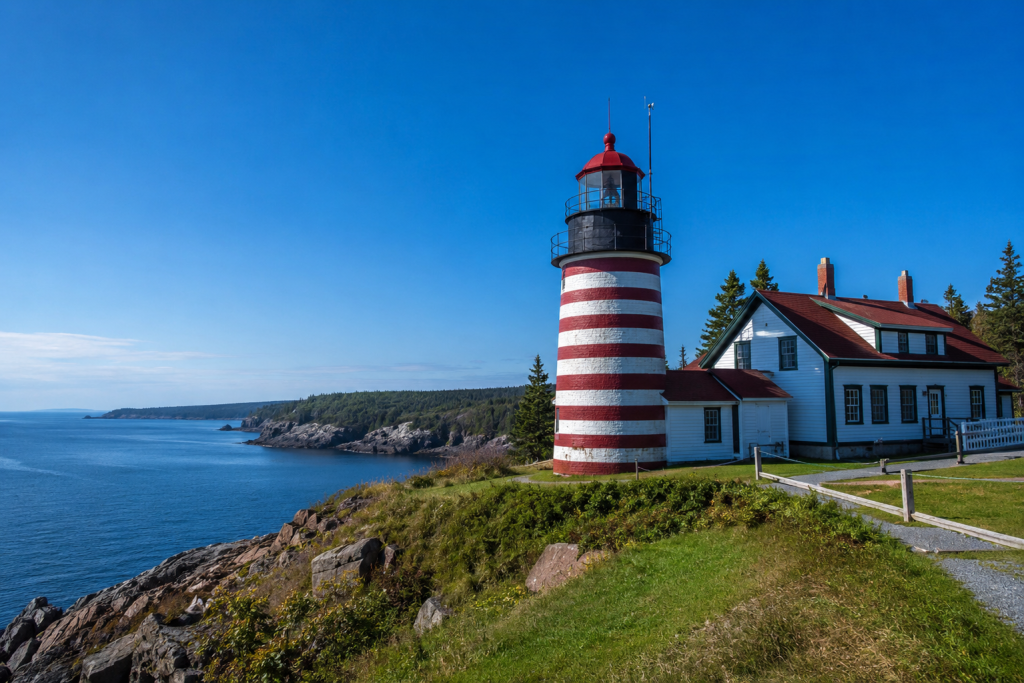
Why it’s special: Striped red and white like a candy cane, this is the easternmost lighthouse in the continental United States, sitting at the edge of Quoddy Head State Park where the Bay of Fundy’s extreme tides do strange, dramatic things to the coastline.
The experience: It’s a haul to get here — most people skip it for that reason — but the bog boardwalk trail through the park, with views of Grand Manan Island across the water, is unlike anything else on this list.
Getting there:
- Address: 973 South Lubec Rd, Lubec, ME 04652
- From Bangor: about 2 hours 45 minutes via Route 9 E
- From Bar Harbor: about 2 hours 15 minutes
- Parking: Free lot at the state park entrance
Practical Info:
- Best months: June through September; coastal fog common in early summer mornings
- Hours: Park open 9 a.m.–sunset
- Entry fee: [VERIFY: current Maine state park day-use fee, likely $4–6 per person]
- Difficulty: Easy main path; Coastal Trail loop is moderate, roughly 4.4 miles round trip
- Dog-friendly: Yes, leashed. Kid-friendly: Yes
- Cell service: Very weak — download offline maps before arriving
Where to Stay Nearby:
- Budget: Eastland Motel, Lubec, roughly $90–120/night,
- Mid-range: Peacock House B&B, Lubec, roughly $150–190/night, peacockhouse.com
- Unique stay: West Quoddy Station Cottages, [VERIFY: current pricing], booking.com listing
Official & Useful Links:
Insider Tip: The bog boardwalk loop off the Coastal Trail is mostly skipped by lighthouse-only visitors — it’s flat, takes 20 minutes, and gives you carnivorous plants and ocean views in the same walk.
6. Bass Harbor Head Light
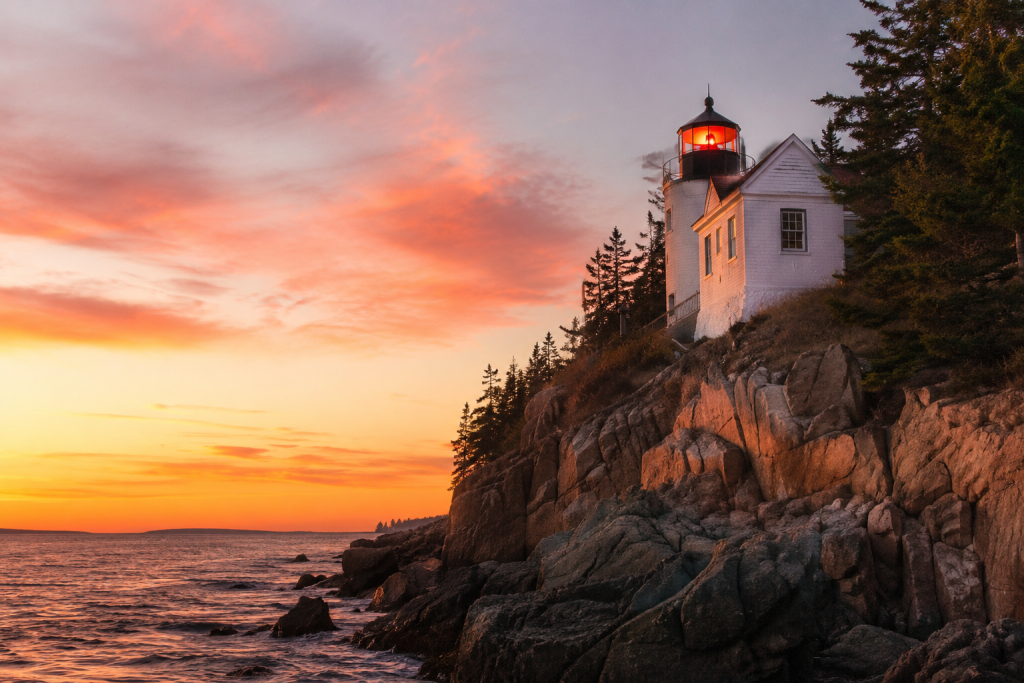
Why it’s special: Perched on a dark basalt cliff at the southern tip of Mount Desert Island, this is the lighthouse most associated with Acadia, even though it’s technically outside the main park loop road.
The experience: Sunset here is genuinely crowded now — word’s gotten out. Go instead at sunrise, or visit at sunset but walk down the steep wooden staircase to the rocks below rather than staying at the main overlook with everyone else.
Getting there:
- Address: 24 Lighthouse Rd, Bass Harbor, ME 04653
- From Bar Harbor: about 25 minutes via Route 102
- From Ellsworth: about 35 minutes
- Parking: Small free lot, fills completely by 6 p.m. in July and August
Practical Info:
- Best months: Late September for fall colors and fewer crowds
- Hours: Grounds open year-round
- Entry fee: Free (no Acadia park pass required for this specific lot)
- Difficulty: Easy to the overlook; the staircase down to the rocks is steep and can be slick
- Dog-friendly: Yes, leashed. Kid-friendly: Yes, but watch kids closely on the stairs and rocks
- Cell service: Moderate
Where to Stay Nearby:
- Budget: Bass Harbor Cottages, roughly $120–160/night,
- Mid-range: Bass Harbor Inn, roughly $180–250/night,
- Unique stay: Seawall Campground (NPS), roughly $22–30/night, recreation.gov
Official & Useful Links:
Insider Tip: The staircase down to the rocks splits halfway — most people stop at the first landing. Keep going to the lower rocks for a sightline with no railing or stairs visible in your photo.
7. Pumpkin Island Light
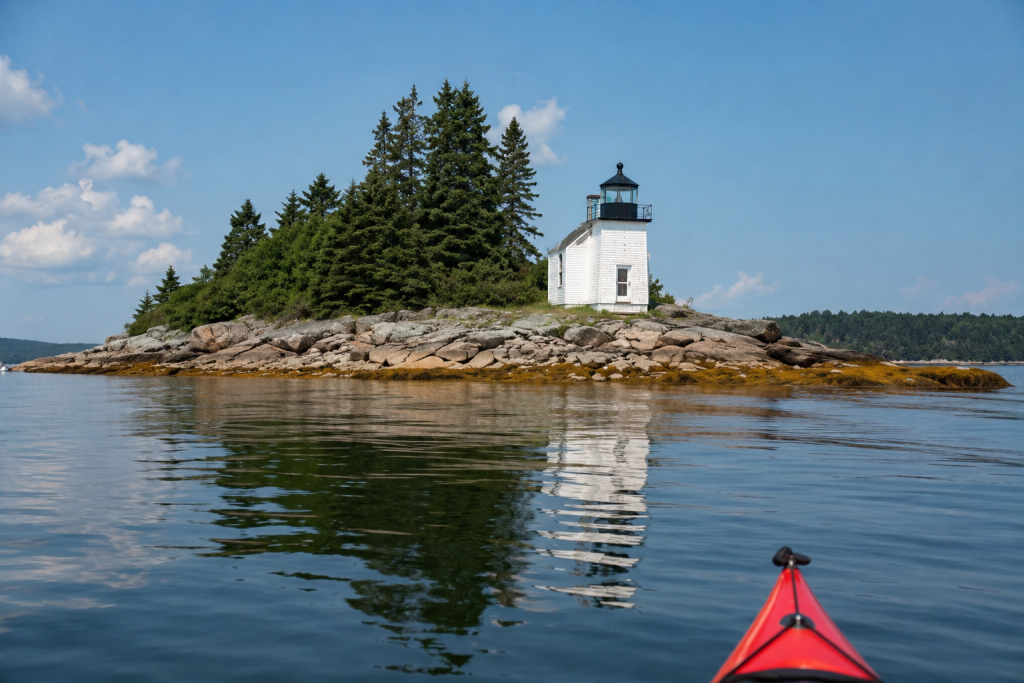
Why it’s special: This one isn’t accessible by car or foot at all — it sits on a tiny private island off Little Deer Isle, and the only way to see it is by kayak, small boat, or a long-lens shot from a specific public pull-off. That inaccessibility is exactly why almost no one includes it on these lists.
The experience: Quiet doesn’t begin to describe it. You’re not fighting anyone for a parking spot or a photo angle, because there isn’t a trail to fight over.
Getting there:
- Viewing spot: Eggemoggin Bridge pull-off, Little Deer Isle, ME 04650
- From Bangor: about 1 hour via Route 15/172
- From Bar Harbor: about 1 hour 15 minutes
- Parking: Small unmarked pull-off at the north end of the bridge, room for 3–4 cars
Practical Info:
- Best months: July through September for calm water and good light
- Hours: N/A, viewable any time from the pull-off
- Entry fee: None
- Difficulty: N/A (no trail; viewing only, or kayak rental for closer access)
- Dog-friendly: N/A. Kid-friendly: Yes, for the viewing spot
- Cell service: Weak
Where to Stay Nearby:
- Budget: Eggemoggin Reach Campground, Sedgwick, roughly $40–60/night, [VERIFY: website]
- Mid-range: Eggemoggin Landing, roughly $150–200/night, eggemogginlanding.com
- Unique stay: Oakland House Seaside Resort cottages, Brooksville, oaklandhouse.com
Official & Useful Links:
- No official public site (private property); local kayak outfitters in Brooksville offer guided paddles past the island
Insider Tip: Ask at Eggemoggin Landing about a sunset kayak rental — paddling out gives you a clean view of the lighthouse with no bridge or wires in frame, which you can’t get from the road.
8. Cape Neddick (Nubble) Light
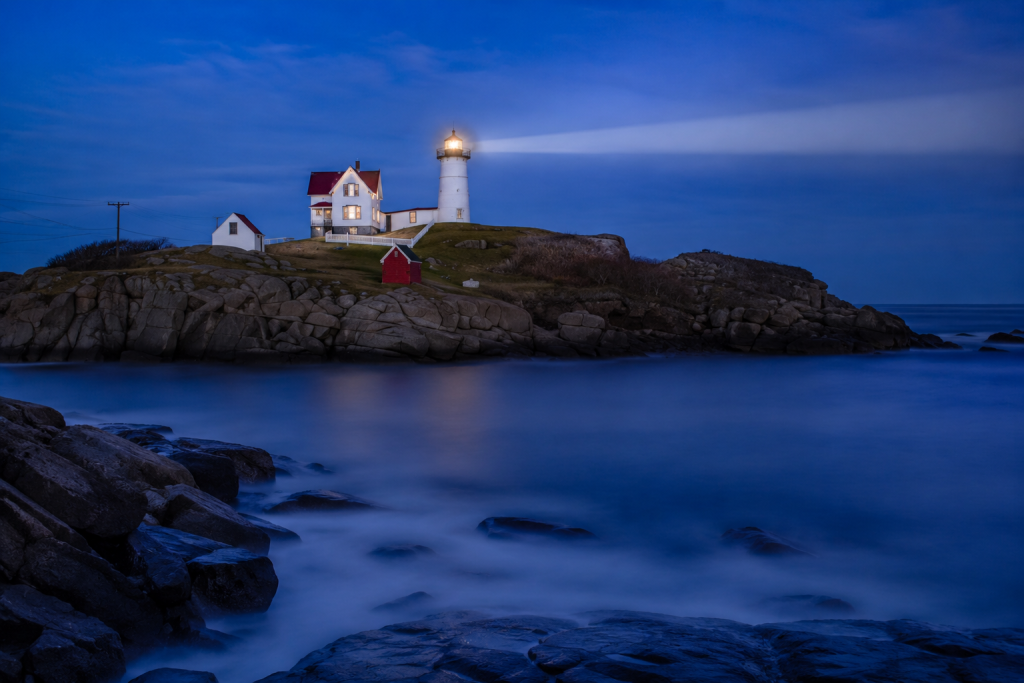
Why it’s special: Sitting on its own small island just off Cape Neddick, this lighthouse is close enough to shore to feel intimate but far enough to stay untouched — and during the holidays it’s strung with lights, a tradition unique to this particular spot.
The experience: The viewing park has benches right at the water’s edge, and on a clear day you can watch the light’s beam start working as dusk settles in, even though you’re standing on the mainland the whole time.
Getting there:
- Address: Sohier Park Rd, York, ME 03909
- From Portsmouth, NH: about 25 minutes via Route 1 N
- From Portland: about 50 minutes
- Parking: Paid lot at Sohier Park,
Practical Info:
- Best months: Year-round; December for the holiday lights tradition
- Hours: Park open dawn to dusk
- Entry fee: Parking fee only, grounds free to view
- Difficulty: Easy, paved walkway
- Dog-friendly: Yes, leashed. Kid-friendly: Yes
- Cell service: Strong
Where to Stay Nearby:
- Budget: York Beach Inn area motels, roughly $90–140/night,
- Mid-range: Union Bluff Hotel, York Beach, roughly $200–280/night, unionbluff.com
- Unique stay: Dockside Guest Quarters, York, roughly $180–260/night, docksidegq.com
Official & Useful Links:
Insider Tip: The small gift shop building at Sohier Park has a second-floor viewing deck most visitors don’t notice — ask the staff, it’s usually open and gives you an elevated angle without the railing visible.
Planning Your Maine Lighthouses Road Trip — Getting Around
The two main airports to fly into are Portland International Jetport (PWM), which puts you within an hour of the first five lighthouses on this list, and Bangor International Airport (BGR), which is closer to Bass Harbor, Pumpkin Island, and a more direct shot toward West Quoddy Head.
The best overall window for this scenic Maine coastal drive is mid-June through early October. June and September offer the best balance of good weather and lighter crowds; July and August are warm but busy, especially around Acadia; October brings foliage but shorter days and a real chance of early cold fronts Downeast.
You won’t need 4WD for any of the stops above — all the parking areas are paved or well-maintained gravel — but if you’re heading out toward West Quoddy Head or Pumpkin Island in shoulder season, check road conditions, since some secondary roads Downeast get minimal winter maintenance. Cell service drops off noticeably east of Ellsworth, so download offline Google Maps for the Lubec/Cutler area and consider an offline AllTrails map if you plan to hike any of the connecting trails.
For pacing: a single day realistically covers Portland Head, Pemaquid Point, and Marshall Point if you start early. A two-day trip lets you add Owls Head and Bass Harbor with a night near Rockland or Bar Harbor. The full eight-lighthouse version, including the detours to West Quoddy Head and Pumpkin Island, works best as a four- or five-day loop starting and ending in Portland.
Where to Eat Along the Way
Red’s Eats, Wiscasset — a roadside lobster shack famous for its overstuffed lobster rolls, roughly $25–30 per roll, worth the wait if you time it for an early lunch before the line forms. redseatsmaine.com
Eventide Oyster Co., Portland — known for its brown butter lobster roll and fresh oysters, roughly $20–35 per entrée, casual counter service. eventideoysterco.com
Cod End, Tenants Harbor — a working wharf restaurant near Marshall Point with picnic tables over the water, known for fish chowder and fried clams, roughly $15–25 per meal.
Frequently Asked Questions
What is the best lighthouse to visit in Maine for a day trip? Portland Head Light is the easiest for a day trip from Portland or Boston, with strong infrastructure, free parking, and a nearby park to explore.
How many lighthouses can you visit in Maine in one weekend? A focused weekend allows for 4–5 lighthouses comfortably, especially if you base yourself in either the Midcoast (Rockland/Camden) or Mount Desert Island area.
Are Maine lighthouses free to visit? Most grounds are free or ask for a small donation; a few sit inside state parks with a modest day-use fee. Museum entry, where available, typically carries a separate small charge.
Is West Quoddy Head Light worth the long drive? Yes, for travelers who want to combine the lighthouse with the Bay of Fundy’s dramatic tides and a genuinely uncrowded coastal trail — but it’s a dedicated detour, not a casual add-on.
What’s the best time of year for a Maine lighthouses road trip? Mid-June through September offers the most reliable weather and longest daylight, while late September into October trades some daylight for fall foliage and noticeably thinner crowds.
Final Thoughts
I came back from this trip with sand in my shoes, a phone full of photos I’ll never quite stop scrolling through, and a genuine itch to go back and do the Downeast stretch again, slower this time. There’s a particular kind of quiet you get standing at the base of one of these towers before the rest of the coast wakes up, and no photo really captures it — you just have to go stand there yourself.
If you’ve done any version of this drive, I’d love to hear which stop surprised you most — drop it in the comments below. And if this kind of slow, detail-heavy travel guide is your thing, check out our companion piece on small towns along the Maine coast for more of the same.
Eight lighthouses, one coastline, and not a single one of them needs a crowd to be worth the drive.