Introduction
Ask most people to name a hidden waterfall in Ohio and they will say Brandywine Falls or maybe Cedar Falls in Hocking Hills. Both are beautiful, and both are completely overrun with visitors every single weekend from spring through fall.
What almost nobody mentions are the dozens of smaller, quieter waterfalls scattered across the state — tucked into metro parks, hidden inside wildlife areas, and buried at the end of trails with no signage and no crowds. These are the falls that Ohio hikers actually talk about when the conversation turns to favorites.
I have spent considerable time tracking down these lesser-known cascades across every region of the state, from forgotten gorges in the southwest to quiet ravines along the Lake Erie shore. This guide covers 10 hidden waterfalls in Ohio that deserve real attention — with exact addresses, trail difficulty, current accessibility details, and the kind of practical information that makes the difference between a frustrating dead end and a perfect afternoon.
Table of Contents
Quick Reference: 10 Hidden Waterfalls in Ohio at a Glance
| # | Waterfall | Location | Height | Difficulty |
|---|---|---|---|---|
| 1 | Buttermilk Falls | Cuyahoga Valley NP | ~20 ft | Moderate |
| 2 | Fallsville Falls | Clinton County | ~15 ft | Moderate |
| 3 | Tinkers Creek Great Falls | Bedford Reservation | ~20 ft | Easy |
| 4 | Indian Run Falls | Dublin | ~10 ft | Easy |
| 5 | Pixley Falls | Vinton County | ~12 ft | Moderate-Hard |
| 6 | Conkles Hollow Lower Falls | Hocking Hills | ~30 ft | Easy-Moderate |
| 7 | Paine Falls | Painesville | Two-tiered | Easy |
| 8 | Whipps Ledges Falls | Hinckley Reservation | ~15 ft | Moderate |
| 9 | Charleston Falls | Tipp City | ~37 ft | Easy |
| 10 | Hidden Falls (Christmas Rocks) | Fairfield County | ~20 ft | Moderate-Hard |
1. Buttermilk Falls — Cuyahoga Valley’s Best Kept Secret
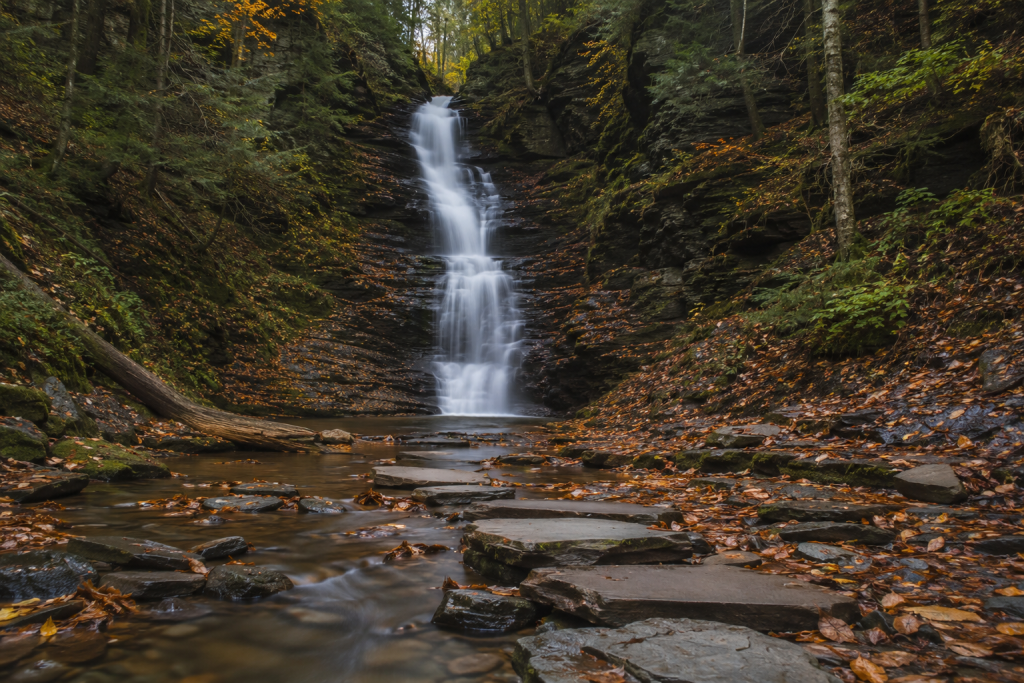
Address: Boston Mills Trailhead, 1550 Boston Mills Rd, Peninsula, OH 44264
Trail Length: Approximately 2 miles round trip from Blue Hen Falls trailhead
Difficulty: Moderate, with a steep creek crossing
Admission: Free
Everyone who visits Cuyahoga Valley National Park stops at Blue Hen Falls. Almost nobody continues downstream to find Buttermilk Falls, even though it sits less than a quarter mile further along the same creek.
The trail beyond Blue Hen Falls narrows considerably and requires a creek crossing that turns back a large percentage of visitors. Those who push through find a 20-foot cascade tumbling over layered shale in a quieter, more secluded section of the gorge. The forest here feels noticeably wilder than the manicured boardwalk areas near the main park entrances.
What makes Buttermilk Falls genuinely rewarding is the contrast with its famous neighbor. Where Blue Hen Falls often has a dozen visitors taking photos at any given time, Buttermilk Falls might offer complete solitude even on a busy Saturday.
What makes it special: The creek crossing acts as a natural filter, keeping crowds away from one of the park’s most photogenic cascades.
Best time to visit: Spring and after heavy rainfall, when water flow is strongest and the crossing is most manageable before water levels drop later in summer.
Insider tip: Wear shoes you do not mind getting wet. The creek crossing is unavoidable, and rocks can be slippery even in lower water.
Nearby: Brandywine Falls is a 10-minute drive away, making this an easy waterfall-focused day inside Cuyahoga Valley National Park.
2. Fallsville Falls — A Forgotten Town’s Last Trace
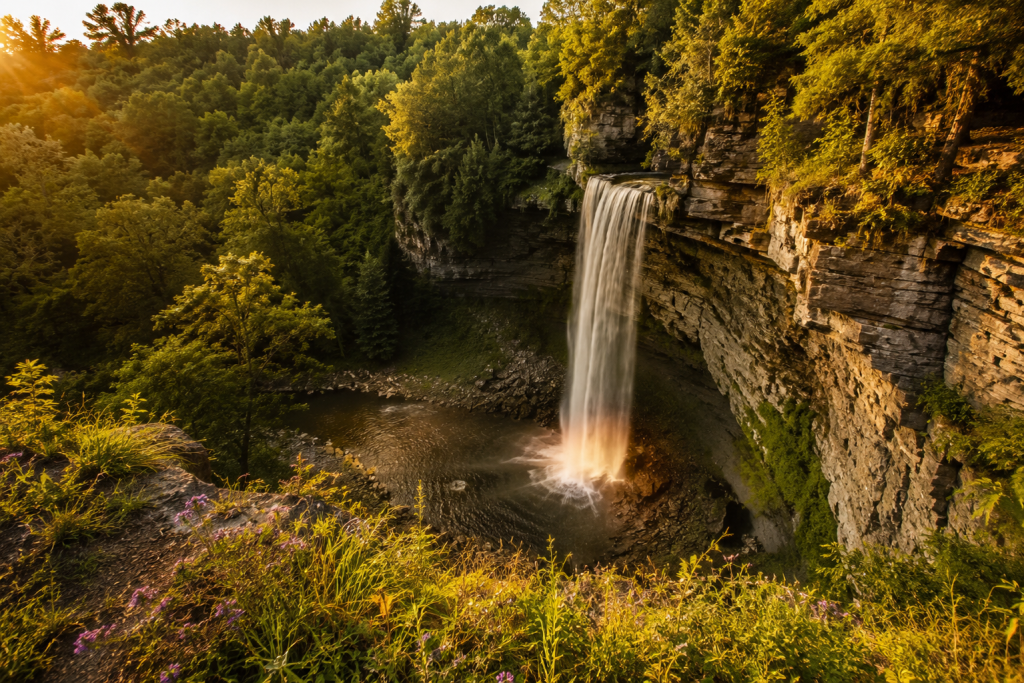
Address: 10211 Careytown Rd, New Vienna, OH 45159
Trail Length: Short approach, roughly 0.5 miles round trip to the overlook
Difficulty: Moderate, with a steep gorge descent for closer access
Admission: Free
Fallsville Falls carries one of the more unusual backstories among Ohio’s hidden waterfalls — it is named after a town that no longer exists. Fallsville once stood near this location in Clinton County before fading away, leaving the waterfall as one of the only remaining namesakes of a community largely forgotten by history.
The waterfall itself sits inside Fallsville Wildlife Area, reached via a small gravel parking lot off Careytown Road that holds only a handful of vehicles. A short trail leads to a cliffside overlook with no railing, requiring visitors to stay alert near the edge. Those wanting a closer view can descend into the gorge via a steep, moderately difficult path.
At roughly 15 feet tall, Fallsville Falls is not the largest waterfall on this list, but the shallow pool at its base allows for safe wading during warm months, and the surrounding wildlife area offers genuine solitude rarely found at more publicized falls.
What makes it special: The combination of a vanished namesake town and a wadeable pool gives Fallsville Falls a character that larger, more photographed waterfalls often lack.
Best time to visit: After rainfall or during spring snowmelt, when flow is strongest. The falls reduce to a trickle during dry summer stretches.
Insider tip: The overlook has no guardrail. Keep children close, and bring water shoes if you plan to wade in the pool at the base.
Nearby: Clifton Gorge is approximately 40 miles northeast, making this a reasonable pairing for a longer southwestern Ohio waterfall day.
3. Great Falls of Tinkers Creek — A National Natural Landmark Few People Visit
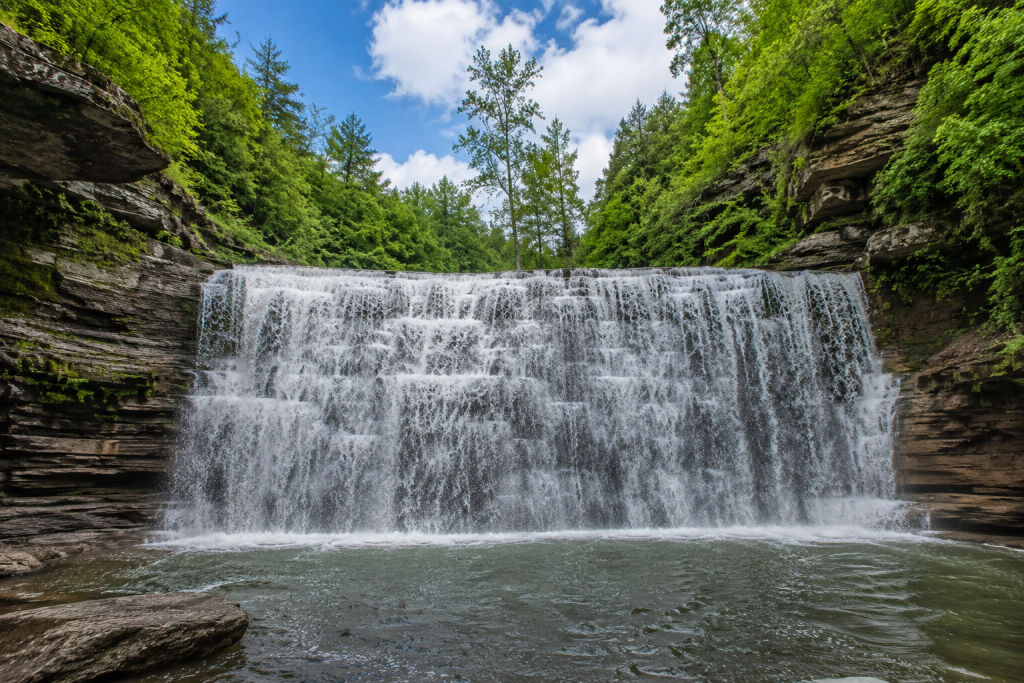
Address: Viaduct Park, Bedford Reservation, Gorge Pkwy, Bedford, OH 44146
Trail Length: Short walk from parking, under 0.5 miles
Difficulty: Easy
Admission: Free
Fifteen to thirty minutes south of Cleveland sits one of Ohio’s most underrated natural landmarks — a designation that should draw crowds but somehow does not.
The Great Falls of Tinkers Creek is a 20-foot-tall waterfall that ranks among the widest in the state, flowing through Viaduct Park inside the Bedford Reservation, part of Cleveland Metroparks. The reservation has earned recognition as a National Natural Landmark, yet the falls remain noticeably quieter than comparable attractions closer to downtown Cleveland.
The gorge beneath the falls is nearly as impressive as the cascade itself, with layered rock walls rising on both sides of the creek. A short, easy walk from the parking area brings visitors directly to a viewing point, making this one of the most accessible hidden waterfalls in northeast Ohio.
What makes it special: Few waterfalls in Ohio combine this level of scale, accessibility, and National Natural Landmark status while remaining this overlooked.
Best time to visit: Spring for peak water flow, and autumn for fall color along the gorge walls.
Insider tip: Visit on a weekday morning. This location is gaining attention online, and weekend crowds have started to grow in recent seasons.
4. Indian Run Falls — A Waterfall Hiding in a Columbus Suburb
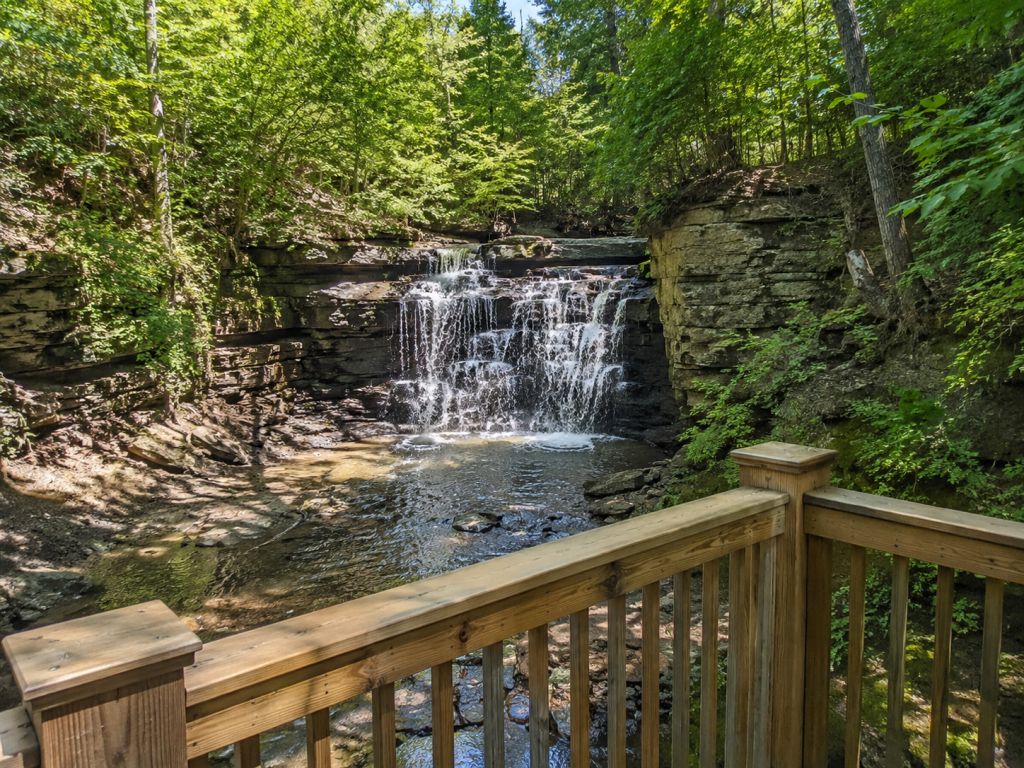
Address: 700 Shawan Falls Dr, Dublin, OH 43017
Trail Length: Approximately 0.5 miles of trail and boardwalk
Difficulty: Easy
Admission: Free
Indian Run Falls proves that hidden gems do not need to be remote. This small but genuinely scenic waterfall sits inside a wooded ravine park in Dublin, a Columbus suburb, just steps away from quiet residential streets.
Once you step down into the ravine and follow the trail toward the creek corridor, the surrounding neighborhood disappears almost entirely. Rock ledges, mature trees, and a stream-carved gorge create a setting with far more character than its suburban location suggests. Observation decks along the Indian Run Falls Trail provide clear views of the cascade without requiring any difficult scrambling.
The waterfall is not large, but the overall experience — a genuine escape into nature within minutes of downtown Dublin — makes this one of central Ohio’s most satisfying short hikes.
What makes it special: The complete disconnect between the suburban surroundings above and the wooded ravine below creates a sense of discovery that larger, more remote waterfalls cannot replicate.
Best time to visit: Year-round, though spring rainfall increases water flow noticeably.
Insider tip: Combine this stop with nearby Hayden Falls, also in Dublin, for a two-waterfall outing that takes less than half a day.
Nearby: Hayden Falls Park, a 35-foot waterfall on the Scioto River, is a short drive away at 4326 Hayden Run Rd.
5. Pixley Falls — Vinton County’s Best Kept Secret
Address: Zaleski State Forest, Vinton County, OH 45686
Trail Length: Approximately 2-3 miles depending on route
Difficulty: Moderate to hard, unmarked sections
Admission: Free
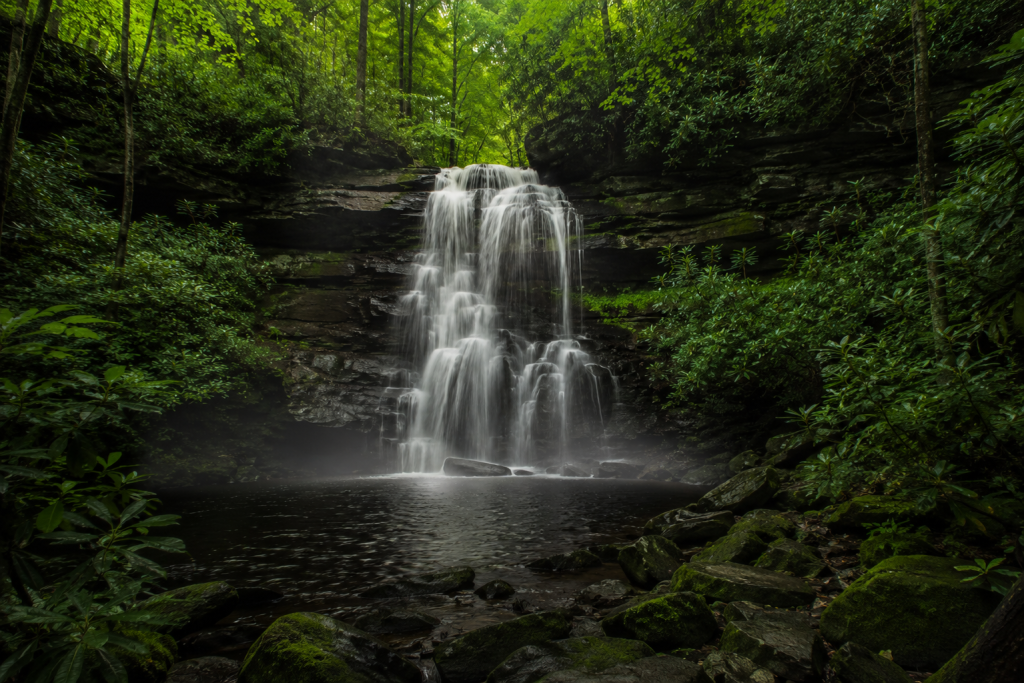
Vinton County is already known among Ohio hikers for Lake Hope State Park and Zaleski State Forest’s extensive trail network. Far fewer know about the small but striking cascade tucked into one of the forest’s quieter hollows.
This waterfall does not appear on official park maps with prominent signage, which is precisely why it remains one of the most genuinely secluded falls in southeastern Ohio. Reaching it requires navigating sections of trail that blend into the surrounding forest, rewarding visitors with a sense of real discovery rather than a marked, manicured walk.
The payoff is a cascade dropping over layered sandstone into a quiet pool, framed by the kind of dense Appalachian-foothill forest that defines this corner of the state. Because so few visitors make the effort to find it, the area around the falls feels untouched compared to more publicized destinations nearby.
What makes it special: The combination of minimal signage and genuine remoteness inside one of Ohio’s largest state forests creates an authentic off-the-beaten-path experience.
Best time to visit: Spring through early summer, when forest trails are most navigable and water flow is consistent.
Insider tip: Download an offline trail map before heading out. Cell service throughout Zaleski State Forest is unreliable, and trail markers are minimal in this section.
Nearby: Lake Hope State Park and Moonville Tunnel are both within Zaleski State Forest’s broader area, making this a strong addition to a southeastern Ohio exploration day.
6. Conkles Hollow Lower Falls — Beneath Ohio’s Most Dramatic Cliffs
Address: 24858 Big Pine Rd, Rockbridge, OH 43149
Trail Length: Approximately 1 mile round trip on the gorge rim trail, longer for the rim loop
Difficulty: Easy to moderate
Admission: Free
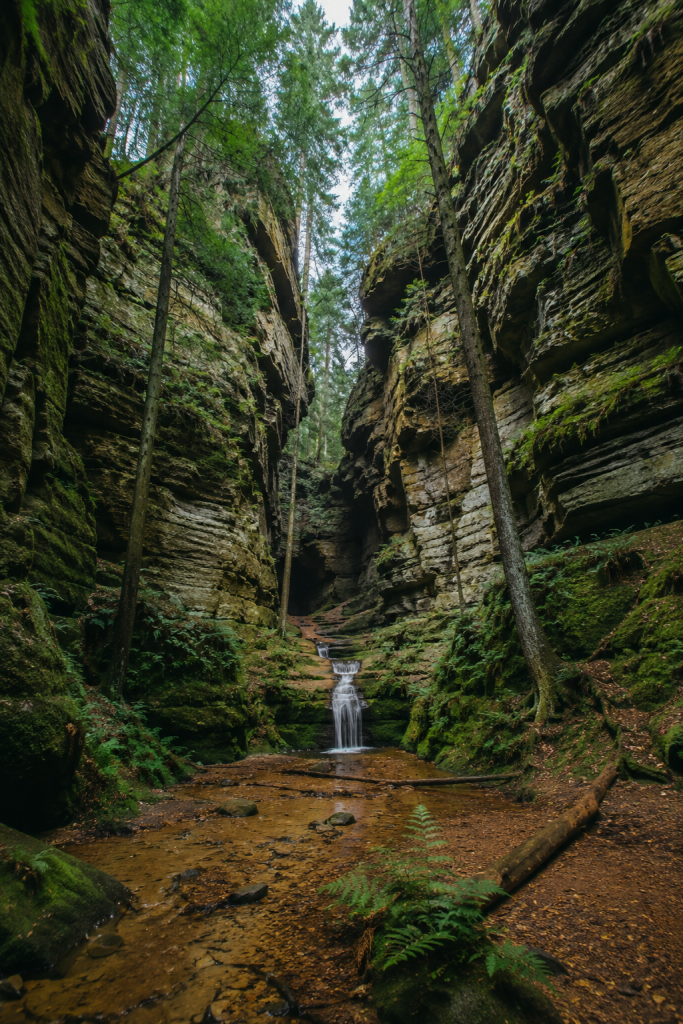
Conkles Hollow is often mentioned in the same breath as Ash Cave for its towering sandstone cliffs, yet the waterfall tucked at the end of its gorge trail receives far less attention than the dramatic rock walls surrounding it.
The gorge floor trail leads hikers through a narrow canyon flanked by cliffs rising over 200 feet on either side, eventually arriving at a small but scenic waterfall at the trail’s end. The surrounding vegetation, often compared to scenes from a tropical rainforest, creates a microclimate distinct from the rest of Hocking Hills.
While Conkles Hollow itself is well known, most visitors focus their attention upward at the cliffs and the rim trail rather than the quiet cascade waiting at the gorge’s terminus — making the waterfall itself the genuinely overlooked element of this popular destination.
What makes it special: The contrast between the towering cliff walls and the modest, peaceful waterfall at the gorge’s end creates a uniquely layered hiking experience.
Best time to visit: Spring and fall for the most comfortable hiking temperatures and the best lighting conditions inside the narrow gorge.
Insider tip: Visit early morning on weekdays. The gorge trail is narrow, and midday weekend crowds can make the walk feel cramped.
7. Paine Falls — A Two-Tiered Cascade Most Northeast Ohioans Skip
Address: 5570 Paine Rd, Painesville, OH 44077
Trail Length: Under a quarter mile from parking
Difficulty: Easy
Admission: Free
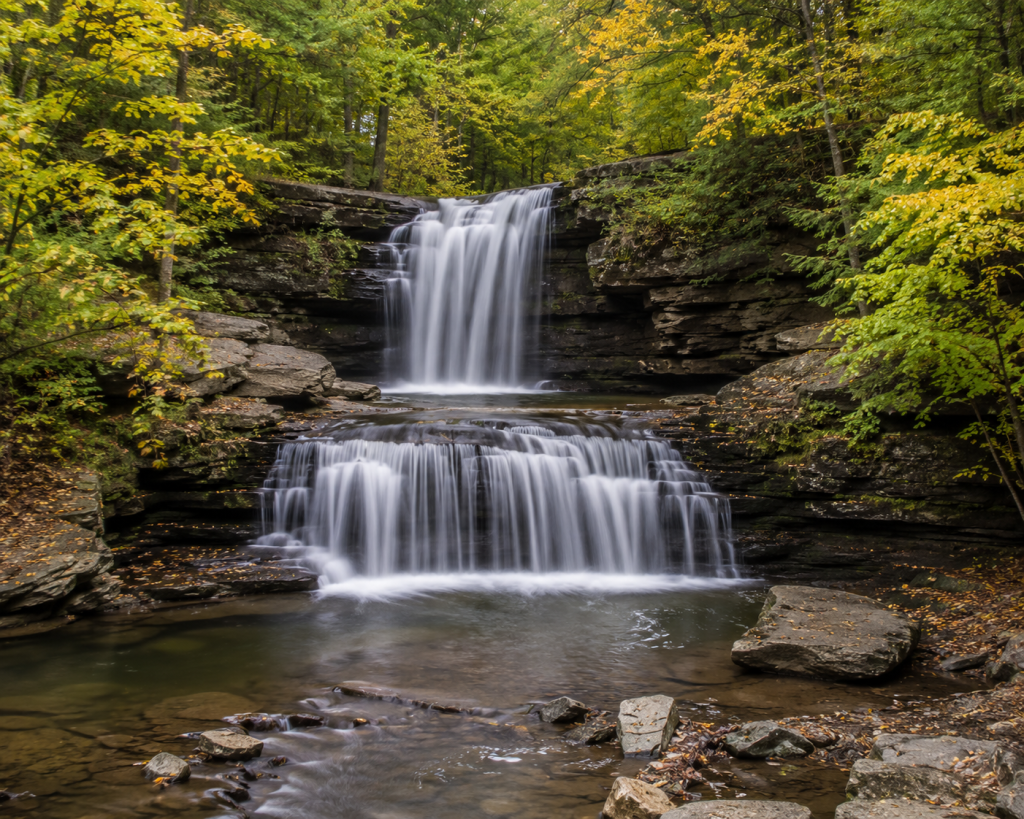
Paine Falls Metropolitan Park offers one of the most accessible waterfall experiences in northeast Ohio, yet it remains noticeably quieter than nearby Lake Erie attractions and Cleveland-area parks.
The falls feature two distinct tiers cascading over layered rock, creating a more visually complex scene than many single-drop waterfalls elsewhere in the state. Visitors can park within close walking distance of the falls, making this an excellent option for anyone short on time or hiking with young children.
The surrounding Lake County park area feels genuinely underused relative to its quality, offering a peaceful setting that larger, more publicized parks in the Cleveland metro area rarely match on a typical weekend.
What makes it special: Few waterfalls in Ohio offer this level of visual interest with this little walking required to reach them.
Best time to visit: Spring for peak flow following snowmelt and seasonal rain.
Insider tip: Bring a tripod if you are interested in photography. The two-tiered structure creates excellent long-exposure compositions, and the lack of crowds makes setup easy.
8. Whipps Ledges Falls — Hinckley Reservation’s Overlooked Cascade
Address: Hinckley Reservation, Hinckley, OH 44233
Trail Length: Approximately 1.5 miles depending on route taken
Difficulty: Moderate, with rock scrambling
Admission: Free
Hinckley Reservation draws visitors primarily for Whipps Ledges, a dramatic rock formation popular with climbers and casual hikers alike. Considerably fewer visitors realize that a quiet seasonal waterfall exists within the same reservation, tucked into a wooded ravine away from the main ledges trail.
Reaching the falls typically requires leaving the most heavily trafficked paths and following secondary trails through denser forest sections of the reservation. The cascade itself is modest in scale but sits within a genuinely peaceful hollow that contrasts sharply with the more popular climbing areas nearby.
Because most visitors come specifically for the rock formations, the waterfall area receives a fraction of Hinckley Reservation’s overall foot traffic, even on weekends when the main ledges are crowded with hikers and climbers.
What makes it special: The proximity to one of Cleveland Metroparks’ most popular formations, combined with how few visitors ever find the falls, creates a genuine hidden-gem contrast within a single well-known park.
Best time to visit: Spring following rainfall, since this is a seasonal waterfall that diminishes considerably during dry summer months.
Insider tip: This waterfall flows seasonally and can disappear entirely during dry stretches. Check recent rainfall before making a dedicated trip.
9. Charleston Falls — A 37-Foot Drop Inside a Well-Kept Preserve
Address: 2535 Ross Rd, Tipp City, OH 45371
Trail Length: Approximately 1.5 miles of looped trails
Difficulty: Easy
Admission: Free
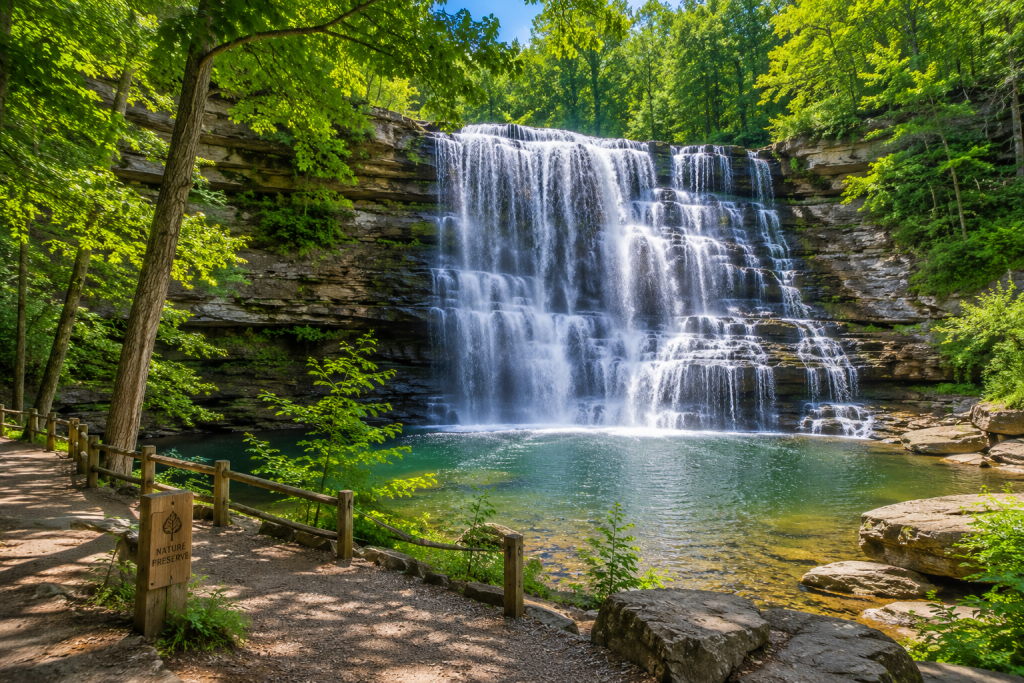
Charleston Falls Preserve near Tipp City offers one of southwestern Ohio’s most underrated waterfall experiences, centered around a 37-foot cascade that rivals far more famous falls elsewhere in the state.
Unlike many hidden waterfalls that require difficult scrambling or unmarked trails, Charleston Falls sits inside a well-maintained preserve with clear walking trails and a nature center that provides helpful context about the area’s geology and ecology. The relatively easy access makes this an excellent option for families or visitors who want a genuinely impressive waterfall without a strenuous hike.
The preserve’s modest size means the falls rarely feel crowded, even though the trail system is well developed and clearly marked throughout.
What makes it special: Few waterfalls in Ohio combine this much height and visual drama with this little required hiking effort.
Best time to visit: Spring for maximum water flow, though the falls maintain a reasonable flow through most of the year compared to smaller seasonal cascades.
Insider tip: Stop at the nature center before or after your hike. Preserve staff can point out additional trail loops most visitors skip entirely.
10. Hidden Falls at Christmas Rocks — Fairfield County’s Best Secret
Address: Christmas Rocks State Nature Preserve, Fairfield County, OH 43130
Trail Length: Approximately 2 miles round trip
Difficulty: Moderate to hard
Admission: Free
Christmas Rocks State Nature Preserve remains one of the least visited natural areas in central Ohio, and the waterfall tucked within its boundaries is correspondingly obscure even among dedicated Ohio waterfall enthusiasts.
The preserve protects sandstone cliffs, hemlock ravines, and a network of trails that see a fraction of the foot traffic found at nearby Hocking Hills destinations just a short drive south. The waterfall itself emerges after a moderately challenging hike through dense forest terrain, rewarding visitors with a cascade that feels genuinely undiscovered.
The preserve’s minimal infrastructure — no visitor center, no paved paths, no signage pointing directly to the falls — keeps casual visitors away entirely, leaving the area to hikers willing to do some genuine route-finding.
What makes it special: This may be the single least-visited waterfall location on this entire list, offering a level of solitude that is increasingly difficult to find anywhere in central Ohio.
Best time to visit: Fall for foliage color against the sandstone cliffs, and spring for the strongest water flow.
Insider tip: Tell someone your planned route before heading out. Trail markings are minimal, and cell service throughout the preserve is unreliable.
Nearby: Hocking Hills State Park is approximately 25 miles south, allowing this stop to anchor a broader southern Ohio waterfall itinerary.
How to Plan Your Ohio Hidden Waterfalls Road Trip
These ten waterfalls span Ohio from the Cleveland metro area to the southwestern corner of the state, making a single all-encompassing trip impractical. Grouping nearby falls by region creates a far more efficient and enjoyable experience.
Northeast Ohio Loop (1–2 days): Great Falls of Tinkers Creek → Buttermilk Falls (Cuyahoga Valley) → Paine Falls → Whipps Ledges Falls
This route stays within the greater Cleveland metro area and can realistically be completed in a single long day or a relaxed overnight trip.
Central Ohio Loop (1 day): Indian Run Falls → Conkles Hollow Lower Falls → Hidden Falls at Christmas Rocks
This route connects a suburban Columbus waterfall with two more remote Hocking Hills-region cascades, working well as a single day with an early start.
Southern and Southwestern Ohio Loop (2 days): Fallsville Falls → Charleston Falls → Pixley Falls
This route covers a wider geographic spread and benefits from an overnight stay, particularly if Pixley Falls is the final stop given its more remote forest location.
Before planning your trip, check local weather conditions, seasonal park updates, and official travel information to help make your even more enjoyable. Official tourism resources can provide updated details about beach access, events, and visitor services Ohio Waterfalls.
Frequently Asked Questions About Hidden Waterfalls in Ohio
What is the most underrated hidden waterfalls in Ohio? Buttermilk Falls in Cuyahoga Valley National Park is consistently overlooked because visitors stop at the more famous Blue Hen Falls just upstream and rarely continue across the creek crossing required to reach it.
Are there hidden waterfalls in Ohio that are easy to access? Yes — Indian Run Falls in Dublin, Paine Falls in Painesville, and Charleston Falls near Tipp City all require minimal hiking and are suitable for visitors of nearly any fitness level.
Which hidden waterfalls in Ohio are best after rain? Fallsville Falls, Whipps Ledges Falls, and Pixley Falls are all seasonal or rain-dependent and look dramatically better within 24 to 48 hours of significant rainfall compared to dry summer conditions.
Are hidden waterfalls in Ohio safe to visit with children? Many are, including Indian Run Falls, Paine Falls, and Charleston Falls, all of which have manageable trails and clear paths. Falls like Fallsville and Pixley involve steeper terrain and require closer supervision.
Do I need a permit to visit any hidden waterfalls in Ohio? Most waterfalls on this list require no permit, though some off-trail sections within state nature preserves may have specific access rules. Always check current Ohio Department of Natural Resources guidance before visiting lesser-known preserve areas.
What is the best season to chase waterfalls in Ohio? Spring consistently offers the strongest water flow across nearly every waterfall in the state due to snowmelt and seasonal rainfall, while fall offers the best combination of moderate flow and scenic foliage.
Final Thoughts
Ohio’s hidden waterfalls reward a specific kind of traveler — one willing to drive a little further, walk a little longer, or cross a creek that most people turn back from. None of the falls on this list require technical skill or special equipment, just a willingness to look past the handful of names that show up on every generic list.
Start with whichever waterfall sits closest to your region, and build outward from there. Ohio’s network of quiet, overlooked cascades is larger than most people realize, and every one of them is waiting for travelers who take the time to find them.
After Explore Hidden waterfalls in Ohio , many travelers continue their outdoor adventures inland. Be sure to read our guide to 15 Scenic Hikes in Ohio Ranked From Easy Loops to Rugged Terrain for the best hiking trails, nature preserves, and scenic overlooks across the Buckeye State.
Explore Our Gem is a USA travel platform covering hidden destinations, scenic road trips, and authentic travel experiences across all 50 states. Every guide is independently researched and written for travelers who want to go beyond the obvious.