Introduction
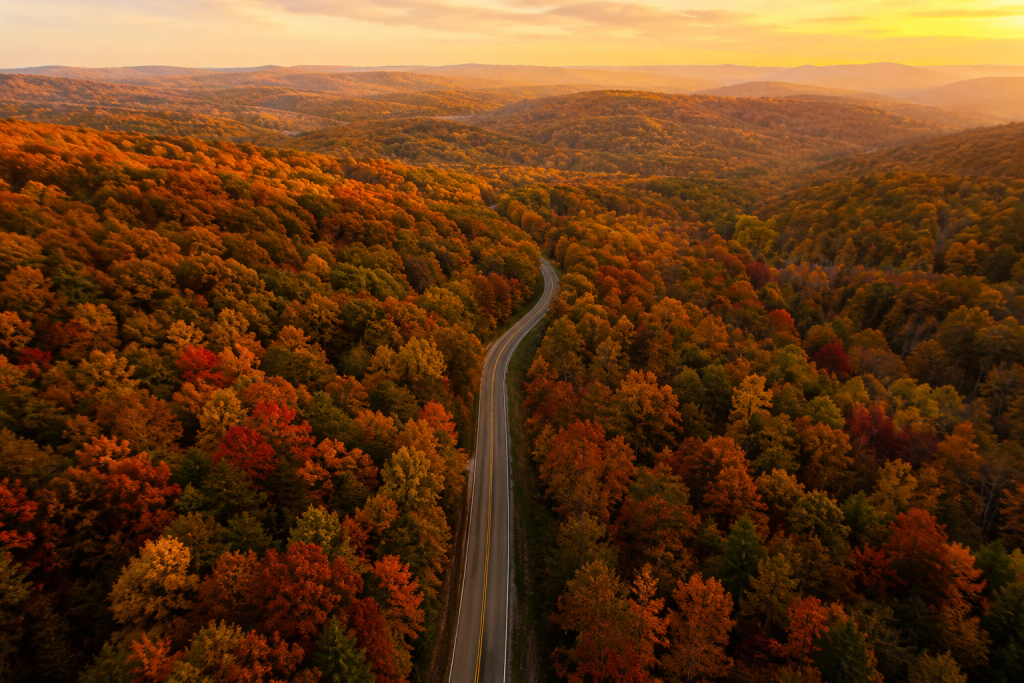
Ohio gets overlooked. Most travelers pass through on their way to somewhere else, stop at Cedar Point or Hocking Hills, and leave convinced they have seen what the state has to offer.
They are wrong — and locals know it.
After exploring Ohio’s backroads, state forests, river valleys, and small towns for years, I can say with confidence that this state hides some of the most genuinely surprising destinations in the entire Midwest. These are not famous places with packed parking lots and gift shops at the entrance. These are the places that Ohio residents point to when someone asks what makes their state worth a second look.
This guide covers 10 hidden gems in Ohio that deserve far more attention than they get. For each one, you will find the exact address, current admission fees, opening hours, best time to visit, and practical tips so you can plan your trip without guessing.
Table of Contents
Quick Reference: 10 Hidden Gems in Ohio at a Glance
| # | Hidden Gem | Location | Admission | Best For |
|---|---|---|---|---|
| 1 | Rockbridge State Nature Preserve | Hocking County | Free | Hiking, Nature |
| 2 | Ohio Caverns | West Liberty | $18–$23 | Families, Adventure |
| 3 | Clifton Gorge State Nature Preserve | Yellow Springs | Free | Hiking, Waterfalls |
| 4 | Malabar Farm State Park | Lucas | Free–$10 | History, Farms |
| 5 | Marblehead Lighthouse State Park | Marblehead | Free | Scenic Views, History |
| 6 | Moonville Tunnel | Vinton County | Free | History, Adventure |
| 7 | Serpent Mound | Peebles | $8 adults | History, Culture |
| 8 | Lake Katharine State Nature Preserve | Jackson | Free | Nature, Solitude |
| 9 | The Wilds | Cumberland | $29–$75 | Wildlife, Families |
| 10 | Caesar Creek State Park | Waynesville | Free | Fossils, Outdoors |
1. Rockbridge State Nature Preserve — Ohio’s Longest Natural Arch
Address: 5995 OH-374, Rockbridge, OH 43149
Hours: Open daily, dawn to dusk
Admission: Free
Phone: (614) 265-6453
Most visitors to Hocking Hills never realize that one of Ohio’s most extraordinary geological features sits just a few miles away — quietly, with almost no crowds and zero admission fee.
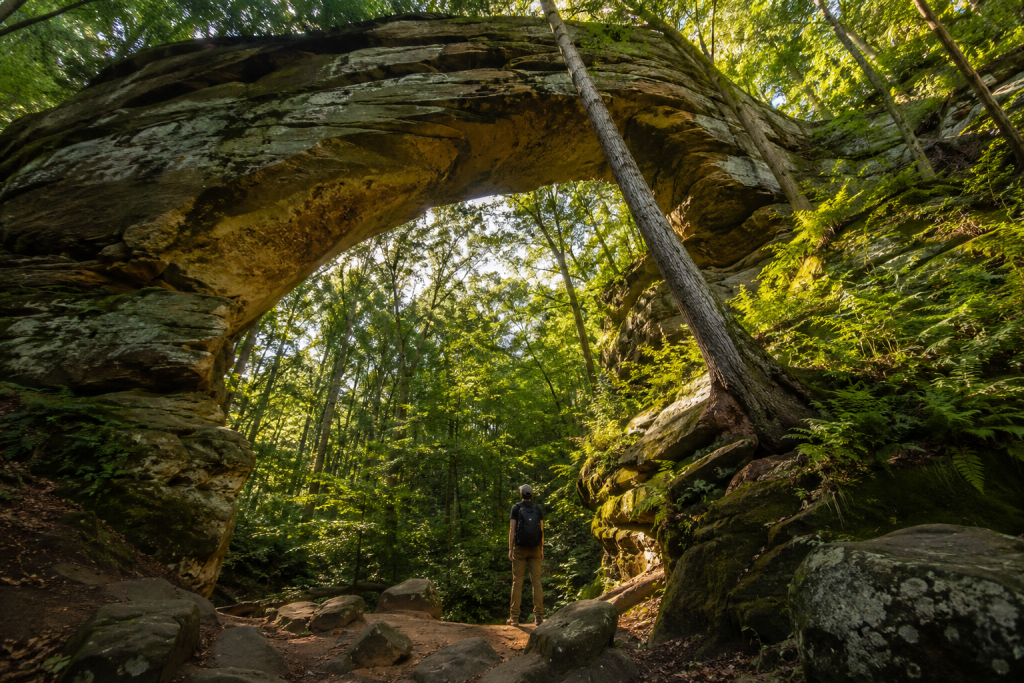
Rockbridge State Nature Preserve protects the longest natural sandstone arch in Ohio, spanning over 100 feet across a wooded ravine. This arch formed over thousands of years through erosion, and standing beneath it gives you a sense of scale that photographs genuinely cannot prepare you for.
The preserve covers 1,140 acres of protected woodland. A short trail leads from the parking area directly to the arch, taking roughly 40 to 50 minutes round trip at an easy walking pace. The path crosses small stream beds and passes through second-growth forest before the arch appears through the trees — a moment that stops most first-time visitors in their tracks.
What makes Rockbridge feel genuinely hidden is the absence of commercialization. There are no vendors, no ticket booths, and no crowds lining up for photos. On a weekday morning, you may have the arch entirely to yourself.
What makes it special: The arch is accessible, completely free, and located close to Hocking Hills — making it an easy add-on that feels like discovering something most visitors missed.
Best time to visit: April through early June for wildflowers, and October for fall foliage color along the trail.
Insider tip: The trail gets muddy after rain. Wear waterproof footwear and bring water — there are no restroom facilities at the preserve.
Nearby: Old Man’s Cave in Hocking Hills State Park is 8 miles away, making this a natural pairing for a full day out.
2. Ohio Caverns — The Most Colorful Cave in America
Address: 2210 OH-245, West Liberty, OH 43357
Hours: April–October: 9 AM – 5 PM daily | November–March: 10 AM – 4 PM daily
Admission: Historic Tour $23 adults, $13 children | Natural Wonder Tour $18 adults, $11 children
Phone: (937) 465-4017
Website: ohiocaverns.com
Most people have never heard of Ohio Caverns. That changes the moment they walk inside.
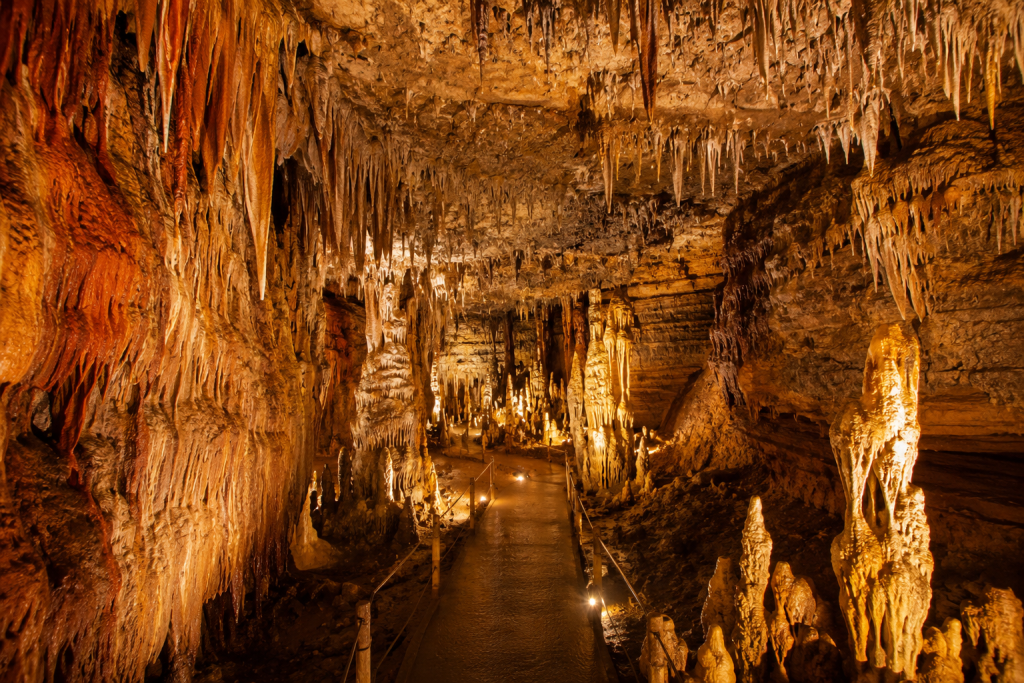
Located near the small town of West Liberty in Logan County, Ohio Caverns is home to some of the most vibrantly colored cave formations in the United States. Unlike many caves where formations appear gray or white, Ohio Caverns displays an unusual range of orange, red, and crystal-white stalactites and stalagmites created by iron and calcium deposits over millions of years.
The cave reaches a depth of 103 feet underground — the deepest accessible cave in Ohio. Two separate tours are available: the Natural Wonder Tour covers approximately half a mile of the cave’s most dramatic formations, while the Historic Tour explores the original discovery area from 1897.
The temperature inside stays at a constant 54°F year-round, making it a genuinely refreshing visit during Ohio’s hot summers and a warm escape during colder months.
What makes it special: The vivid coloration of the formations sets Ohio Caverns apart from every other cave in the Midwest. The “Crystal King” stalactite — the largest and oldest formation in the cave — is alone worth the trip.
Best time to visit: Summer for cooling off during heat, and any time of year since the cave experience is identical regardless of season.
Insider tip: Book tickets in advance during summer weekends. Tours have limited capacity and sell out on busy days.
Nearby: Piatt Castles (two 19th-century Norman-style castles) are just minutes away and pair perfectly with a cavern visit.
3. Clifton Gorge State Nature Preserve — A Canyon Hidden in Plain Sight
Address: 2381 OH-343, Yellow Springs, OH 45387
Hours: Open daily, dawn to dusk
Admission: Free
Phone: (937) 767-7275
Yellow Springs attracts visitors for its artisan shops, eclectic culture, and Glen Helen Nature Preserve. What most of those visitors miss is Clifton Gorge — a narrow limestone canyon just minutes away that represents some of the most dramatic natural scenery in Ohio.
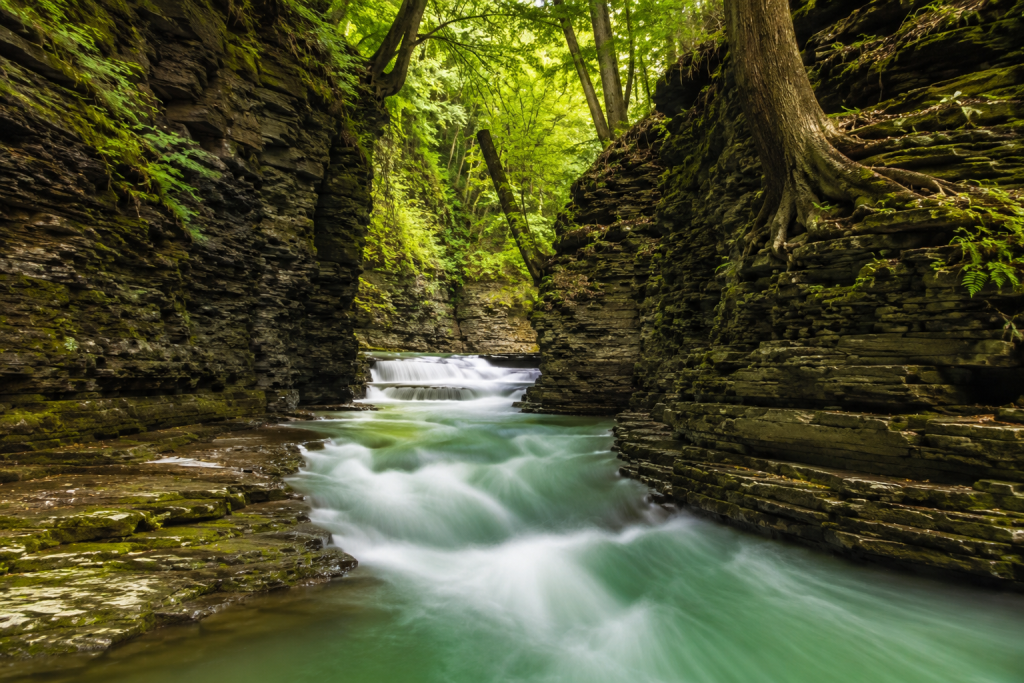
The Little Miami River carved Clifton Gorge over thousands of years, creating vertical canyon walls that rise steeply on both sides of fast-moving water. Waterfalls, churning rapids, exposed dolomite formations, and ancient cedar trees growing from cliff faces make this one of the most visually striking hikes in the state.
The trail follows the gorge downstream for roughly 1.5 miles before connecting to John Bryan State Park, allowing hikers to extend their route into a half-day adventure. The combination of flowing water, limestone cliffs, and dense canopy creates a landscape that feels more like Appalachian Kentucky than central Ohio.
What makes it special: The gorge contains rare plant species that survived the last ice age by sheltering in the canyon’s microclimate. It is genuinely one of Ohio’s most ecologically important natural areas.
Best time to visit: Late spring when snowmelt keeps water levels high, making the rapids and waterfalls most dramatic.
Insider tip: Some sections of the trail run very close to steep drop-offs without guardrails. Keep children and pets on leash and stay on marked paths at all times.
Nearby: Glen Helen Nature Preserve and Young’s Jersey Dairy in Yellow Springs make this an easy full-day destination.
4. Malabar Farm State Park — A Living Piece of American Literary and Agricultural History
Address: 4050 Bromfield Rd, Lucas, OH 44843
Hours: Park open daily 8 AM – 9 PM | Big House Tours: Tuesday–Sunday 11 AM – 4 PM
Admission: Park free | Big House Tour $8 adults, $4 children
Phone: (419) 892-2784
Malabar Farm is the kind of place that reveals layers the longer you spend time there.
Louis Bromfield won the Pulitzer Prize for fiction in 1927, then walked away from New York literary fame to return to his home state of Ohio. In 1939, he purchased three failing farms in Richland County, combined them into Malabar Farm, and spent the rest of his life pioneering sustainable agriculture techniques that directly influenced modern soil conservation practices across the United States.
The farm became a gathering point for Hollywood celebrities, scientists, politicians, and writers. Humphrey Bogart and Lauren Bacall chose Malabar Farm as the site of their wedding in 1945, with the ceremony taking place in the historic Big House.
Bromfield died in 1956. The farm was donated to the state and became one of Ohio’s most distinctive state parks — a working farm that also functions as a living museum. Visitors can tour the Big House, walk the farm trails, and observe sustainable farming practices that Bromfield developed seven decades ago and that still hold relevance today.
What makes it special: The combination of literary history, sustainable farming heritage, and celebrity connection makes Malabar Farm unlike any other state park in Ohio.
Best time to visit: May through October when the farm is most active. Fall foliage across Richland County’s rolling hills provides beautiful scenery.
Insider tip: Big House tours run on a schedule and can fill up. Call ahead or arrive early to confirm tour availability during busy periods.
5. Marblehead Lighthouse State Park — Lake Erie’s Oldest Lighthouse
Address: 110 Lighthouse Dr, Marblehead, OH 43440
Hours: Park open daily | Lighthouse tours May–October, weekends only
Admission: Free
Phone: (419) 734-4424
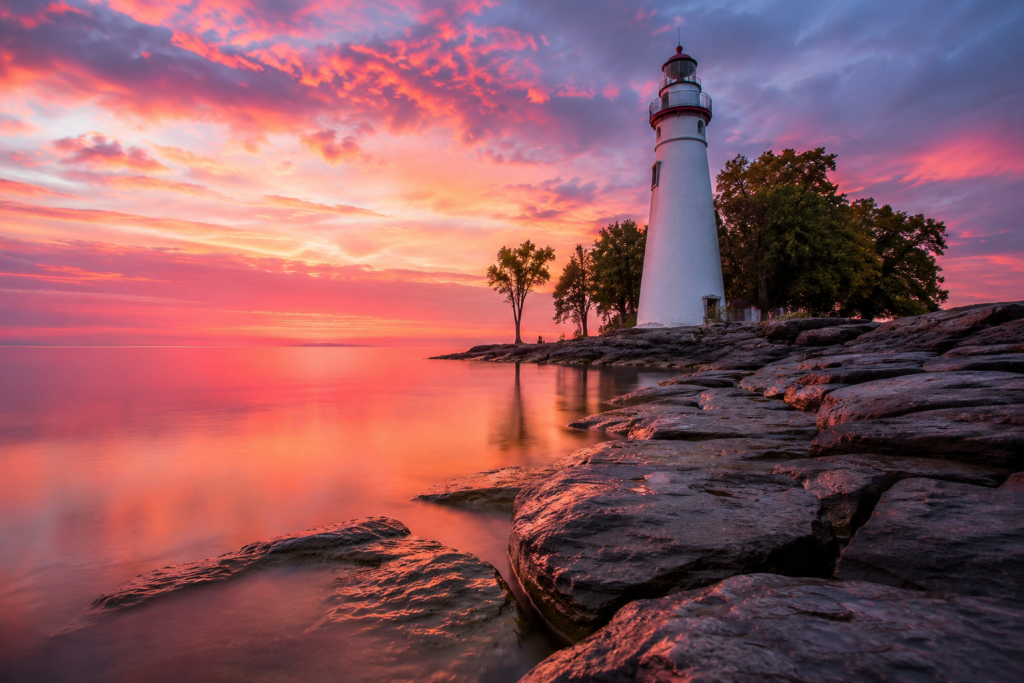
The Marblehead Lighthouse has stood on the rocky shore of Lake Erie since 1821, making it the oldest continuously operating lighthouse on the Great Lakes. Most travelers to northern Ohio drive past it on their way to Put-in-Bay or Cedar Point without realizing what they are passing.
The lighthouse rises 65 feet above the Lake Erie shoreline from a rocky limestone peninsula that offers some of the most scenic lake views in Ohio. On clear days, the Canadian shore is visible in the distance. The combination of historic architecture, dramatic lake scenery, and quiet surroundings makes this one of the most photogenic spots in the state.
The surrounding state park area provides picnic facilities, paved walking paths, and direct lake access from rocky shoreline areas. During migration season, the peninsula becomes an exceptional birding location as thousands of hawks, warblers, and waterfowl funnel past this point on their journey along the Lake Erie corridor.
What makes it special: The lighthouse has operated continuously for over 200 years — through storms, shipping disasters, and the full arc of Great Lakes maritime history. Standing at its base connects you to that entire story.
Best time to visit: September and October for fall hawk migration. May and June for spring warbler migration and comfortable temperatures.
Insider tip: Arrive early on weekend mornings during summer. The small parking area fills quickly, and the lighthouse views are significantly better without crowds.
Nearby: Kelleys Island and Put-in-Bay ferry terminals are nearby, making this an easy starting point for a Lake Erie island day trip.
6. Moonville Tunnel — Ohio’s Most Atmospheric Abandoned Railroad
Address: Trailhead on Wheelabout Road, Vinton County, OH 45631
Hours: Open daily, dawn to dusk
Admission: Free
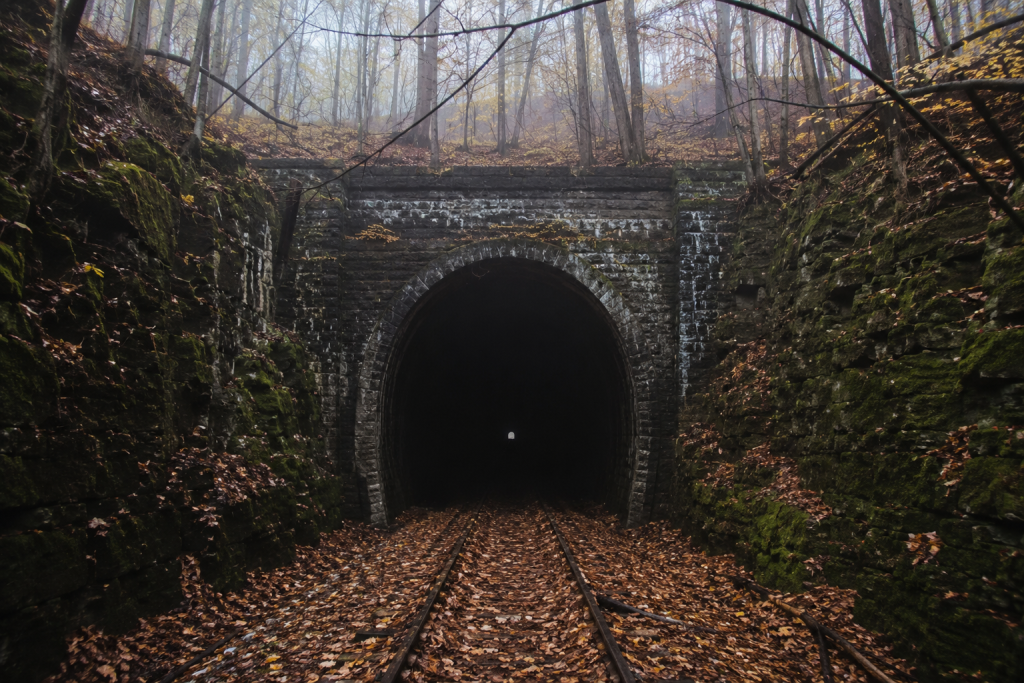
The Moonville Tunnel sits at the end of a wooded trail in Vinton County, and nothing quite prepares you for the moment it comes into view through the trees.
The stone tunnel portal was built in the 1850s as part of the Marietta and Cincinnati Railroad. It served a small mining community called Moonville that once stood in this remote section of southern Ohio. The community disappeared entirely — no buildings remain, no markers, no evidence beyond the tunnel itself and a small historic cemetery nearby.
The tunnel stretches roughly 200 feet through a hillside. Inside, it is completely dark, slightly damp, and acoustically strange — sounds bounce off the stone walls in a way that feels disorienting. The railroad grade extending from both ends of the tunnel is still visible, disappearing into forest on either side.
Local folklore has built up around this site for generations, with stories of strange lights and unexplained encounters that have given Moonville a lasting reputation among people interested in Ohio’s paranormal history. Whether or not you find those stories credible, the tunnel is a genuinely moving place — a physical remnant of a community that existed, worked, and vanished completely.
What makes it special: The complete disappearance of the town that built this tunnel gives Moonville a weight that most historic sites lack. You are standing at the only surviving evidence of an entire community.
Best time to visit: April through June and September through October for comfortable hiking conditions on the wooded trail.
Insider tip: Bring a flashlight — the tunnel interior is completely dark even at midday. The trail can be muddy after rain, so waterproof footwear is recommended.
Nearby: Lake Hope State Park and Hocking Hills are within reasonable driving distance, making this a strong addition to a southern Ohio road trip itinerary.
If you’re extending your Ohio adventure beyond historic cemeteries, consider exploring the state’s beautiful northern shoreline. Our Ohio Lake Erie Beach Road Trip: Best Beaches, Coastal Towns & Travel Guide highlights scenic waterfront destinations, charming lakeside communities, and some of the best beach experiences in the Midwest.
7. Serpent Mound — One of the World’s Greatest Ancient Earthworks
Address: 3850 OH-73, Peebles, OH 45660
Hours: April–October: 10 AM – 5 PM daily | November–March: weekends only
Admission: $8 adults, $4 children
Phone: (800) 752-2757
Serpent Mound is not entirely unknown, but it remains dramatically undervisited for what it actually is — one of the most remarkable prehistoric structures in the entire world.
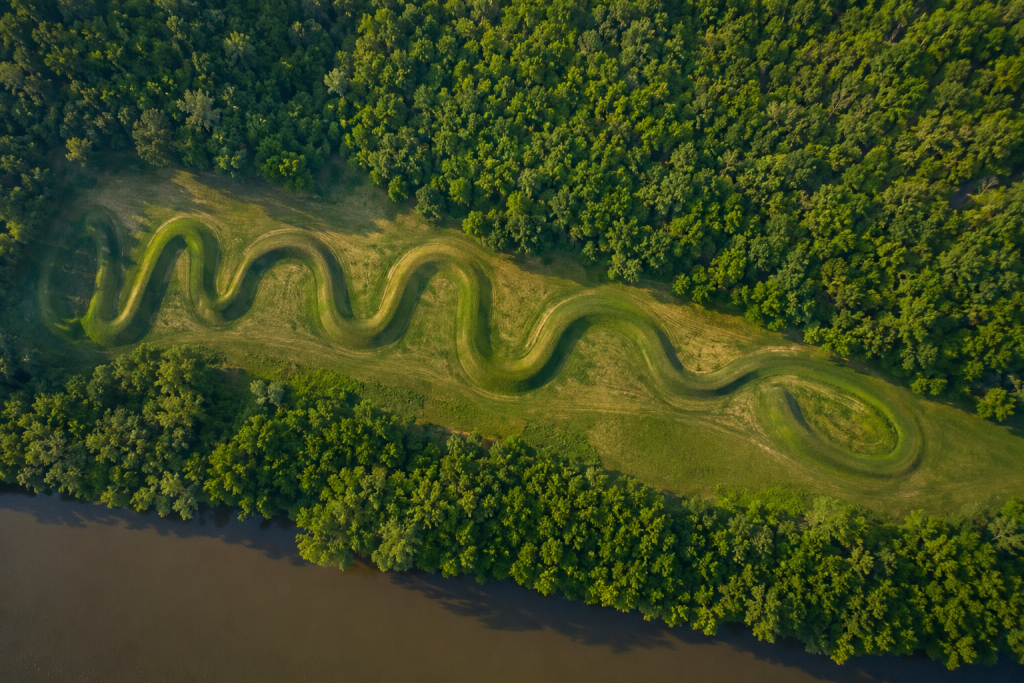
This effigy mound stretches 1,348 feet along a bluff above Brush Creek in Adams County, taking the unmistakable shape of an uncoiling serpent. It was built by Indigenous peoples of either the Adena or Fort Ancient culture, with construction estimates ranging from 300 BCE to 1100 CE. The precision of the design, executed without aerial perspective or modern surveying tools, staggers archaeologists who study it today.
An elevated observation tower at the site allows visitors to view the full extent of the mound from above — the only angle from which the serpent form becomes fully apparent. From the tower, the scale and intentionality of the design are impossible to deny.
The surrounding bluff overlooks a wooded valley carved by Brush Creek below, adding natural beauty to the historic significance of the site.
What makes it special: No other earthwork like this exists in North America. The serpent form, the scale, and the precision of its construction remain subjects of active archaeological research.
Best time to visit: Summer solstice draws modest gatherings of visitors interested in the mound’s possible astronomical alignments. Any clear day offers a rewarding visit.
Insider tip: The on-site museum provides essential context for understanding what you are looking at and should not be skipped. Plan at least 90 minutes for a complete visit.
8. Lake Katharine State Nature Preserve — A Southern Forest in the Middle of Ohio
Address: 1 Jackson Rd, Jackson, OH 45640
Hours: Open daily, dawn to dusk
Admission: Free
Phone: (614) 265-6453
Lake Katharine looks and feels like it belongs in the mountains of North Carolina — which makes finding it in southern Ohio so genuinely surprising.
The preserve protects a rare hemlock and rhododendron forest growing inside a sheltered sandstone canyon in Jackson County. This ecosystem exists here because the canyon walls block enough direct sunlight and retain enough moisture to support plant communities typically found much further south and east. It is a botanical anomaly made possible by the specific geography of one Ohio county.
The lake itself sits at the center of the preserve, ringed by forested ridges that reflect in the still water on calm mornings. Trails loop through the canyon and around the shoreline, passing beneath towering hemlocks and across small stream crossings that require careful footing after rainfall.
Because Lake Katharine does not appear on most Ohio travel lists, it receives a fraction of the visitors that comparable preserves attract. A weekday visit often means having the trails to yourself.
What makes it special: The botanical rarity of this hemlock and rhododendron ecosystem gives Lake Katharine a character found nowhere else in Ohio.
Best time to visit: Late May and early June when the rhododendrons bloom. The combination of pink and white flowers against dark hemlock canopy is unlike anything else in the state.
Insider tip: Bring insect repellent during summer months. The humid canyon environment is productive for mosquitoes during warm weather.
9. The Wilds — North America’s Largest Wildlife Conservation Center
Address: 14000 International Rd, Cumberland, OH 43732
Hours: May–October: 9 AM – 4 PM (last tour departs 3 PM)
Admission: Safari tour from $29 adults, $18 children | Pricing varies by tour type
Phone: (740) 638-5030
Website: thewilds.columbuszoo.org
The Wilds is the kind of place you describe to someone and watch their expression change from polite interest to actual disbelief.
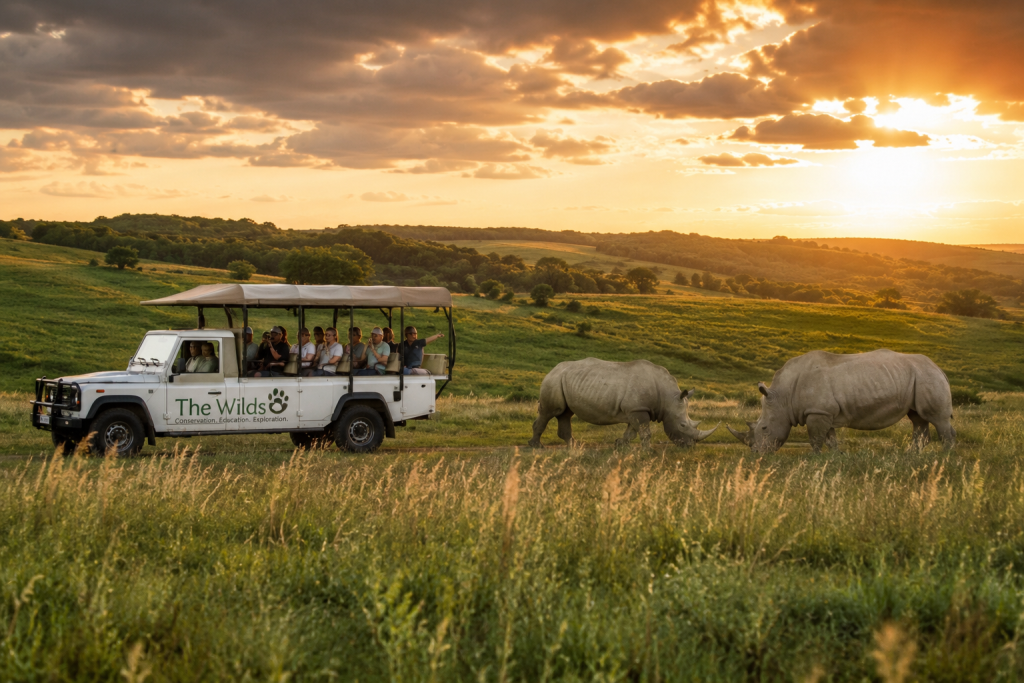
This open-range wildlife conservation facility covers 10,000 acres of reclaimed strip mine land in southeastern Ohio — the largest land-based wildlife conservation center in North America. It is home to some of the rarest animals on the planet, including northern white rhinos, Przewalski’s horses, Amur tigers, cheetahs, and more than 30 other endangered and threatened species.
Open-air safari tours carry visitors through the property in specialized vehicles, bringing them within close proximity to animals living in large naturalistic habitats. The scale is difficult to describe — this is not a zoo where you walk from enclosure to enclosure. This is a working conservation facility where animals roam across hundreds of acres and tours navigate between them.
Beyond the standard safari, The Wilds offers zip line tours over animal habitats, boat tours on its lakes, and overnight glamping accommodations that place guests in the middle of the property after day visitors leave.
What makes it special: The combination of genuine conservation work, extraordinary animal access, and the backstory of this land — once a strip mine, now an international conservation facility — gives The Wilds a purpose and weight that standard animal attractions lack.
Best time to visit: May through September for the full range of tour options. Animals are most active during early morning, so book the first tour of the day when available.
Insider tip: Advance reservations are required. Tours operate on fixed schedules and sell out on weekends during summer. Book at least one week ahead.
10. Caesar Creek State Park — Ohio’s Best Kept Fossil Secret
Address: 8570 OH-73, Waynesville, OH 45068
Hours: Open daily, 6 AM – 11 PM
Admission: Free (vehicle permit may apply for some areas)
Phone: (513) 897-3055
Caesar Creek State Park covers 10,771 acres of forests, wetlands, and a large reservoir in Warren County — and most of the visitors who come here for swimming and boating have no idea they are standing on one of the best fossil sites in Ohio.
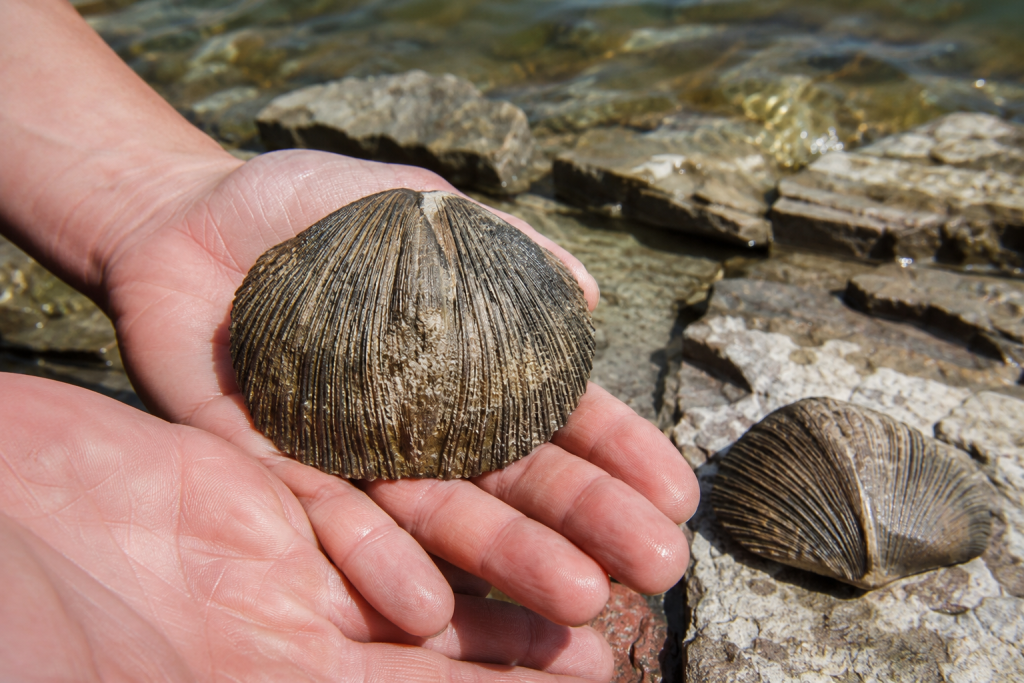
The ancient seabed exposed along the park’s lake shores and spillway contains an extraordinary concentration of marine fossils from the Ordovician period, deposited roughly 450 million years ago when Ohio was covered by a shallow tropical sea. Brachiopods, cephalopods, trilobites, and corals emerge from the limestone regularly, particularly after rainfall loosens material along the shore.
The park actively permits fossil collecting from designated areas — visitors can legally search for and keep what they find. This makes Caesar Creek one of the only places in Ohio where a family can spend an afternoon genuinely discovering fossils and take them home.
Beyond fossil hunting, the park offers excellent hiking on trails through diverse habitats, swimming beaches, fishing, and paddling on the reservoir.
What makes it special: Legal, accessible fossil hunting from a 450-million-year-old seabed — with a good state park wrapped around it. Few places in the Midwest offer anything comparable.
Best time to visit: Spring and after rainfall, when fresh material is exposed along fossil areas. Summer weekends bring crowds to the swimming areas, but fossil hunting spots are usually less congested.
Insider tip: Visit the park’s visitor center before heading to fossil areas. Staff can show you exactly where to look, what to look for, and confirm current conditions.
Many travelers combine cemetery visits with outdoor adventures, especially during spring and fall. For nature lovers looking to explore Ohio’s forests, waterfalls, and scenic landscapes, our 15 Scenic Hikes in Ohio Ranked From Easy Loops to Rugged Terrain guide offers excellent trail recommendations across the state.
How to Plan Your Ohio Hidden Gems Road Trip
These ten destinations span Ohio from the Lake Erie shore to the southern Appalachian foothills, covering very different landscapes and experiences. A strategic road trip could connect several of them into a memorable multi-day journey.
Southern Ohio Loop (2–3 days): Serpent Mound → Lake Katharine → Moonville Tunnel → Rockbridge Preserve → Clifton Gorge
This route covers the most geologically and historically distinct part of Ohio, following a loop through Hocking Hills country and the ancient Appalachian foothills of the south.
Central and Northern Ohio (1–2 days): Ohio Caverns → Malabar Farm → Marblehead Lighthouse → Kelleys Island ferry
This route connects the natural wonder of Ohio Caverns with the agricultural history of Malabar Farm, finishing at the Lake Erie shore for a scenic overnight on Kelleys Island.
Family Adventure Route: The Wilds → Caesar Creek State Park → Ohio Caverns
This three-stop route is designed for families with children and combines large-scale wildlife, outdoor recreation, and accessible fossil hunting into a weekend that works for all ages.
Visitors planning a trip to the area can find maps, trail information, and visitor updates through Ohio Department of Natural resources.
Frequently Asked Questions About Hidden Gems in Ohio
What is the most underrated place to visit in Ohio? Rockbridge State Nature Preserve consistently surprises visitors who expect to find a typical hiking trail and instead discover Ohio’s longest natural sandstone arch — completely free and rarely crowded even during peak season.
Are there free hidden gems in Ohio? Yes — several of the best hidden gems in Ohio are completely free, including Rockbridge State Nature Preserve, Clifton Gorge, Moonville Tunnel, Lake Katharine, and Caesar Creek State Park’s fossil areas.
What are the best hidden gems in Ohio for families? The Wilds, Caesar Creek State Park (fossil hunting), and Ohio Caverns are the strongest family-friendly options. All three offer hands-on experiences that engage children and adults equally.
What is the best time of year to explore hidden places in Ohio? Late April through early June and mid-September through October offer the best combination of comfortable weather, lower crowds, and dramatic natural scenery — especially for the forest and canyon destinations on this list.
Are there hidden gems in Ohio near Columbus? Yes — Clifton Gorge in Yellow Springs is about 70 miles from Columbus, and Caesar Creek State Park is roughly 85 miles southwest of the city. Both make excellent day trips.
What hidden gems in Ohio are worth an overnight trip? The Wilds offers glamping accommodations on-site. Moonville Tunnel and Lake Katharine are both in southern Ohio, which has strong camping infrastructure at nearby state parks including Lake Hope and Tar Hollow.
Final Thoughts
Ohio’s hidden gems are not hidden because they are difficult to reach or poorly maintained. Most of them are easily accessible, well-preserved, and genuinely remarkable. They are hidden because Ohio has never needed to shout about itself, and its best places have been quietly waiting for the travelers who take the time to look.
The ten destinations on this list represent a real Ohio that most visitors never see — ancient, surprising, specific, and worth every mile of the drive to find them.
Start with whichever destination fits your interests most closely. Then keep exploring. Ohio has a way of rewarding the people who give it genuine attention.
Explore Our Gem is a USA travel platform covering hidden destinations, scenic road trips, and authentic travel experiences across all 50 states. Every guide is independently researched and written for travelers who want to go beyond the obvious.